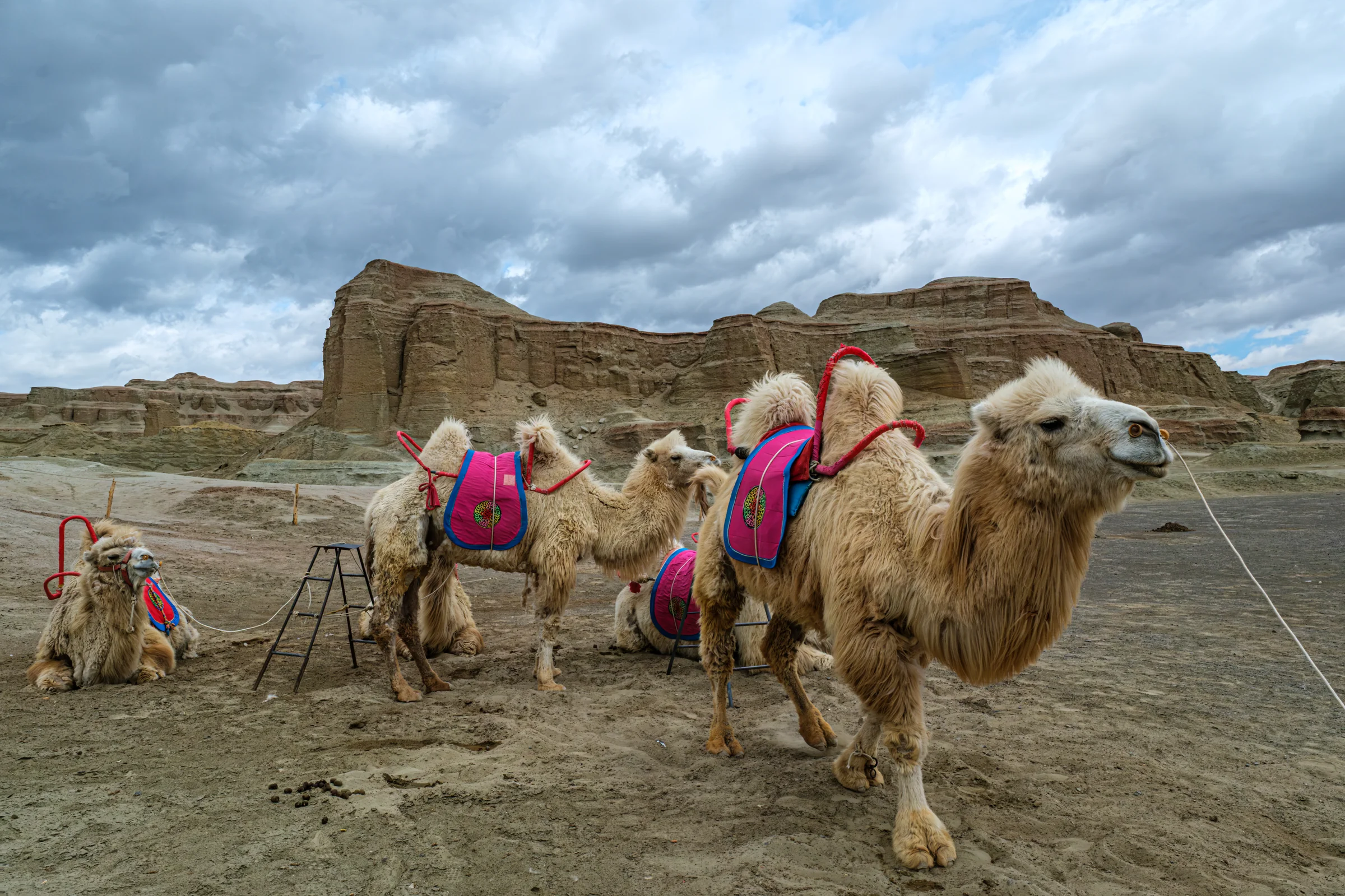
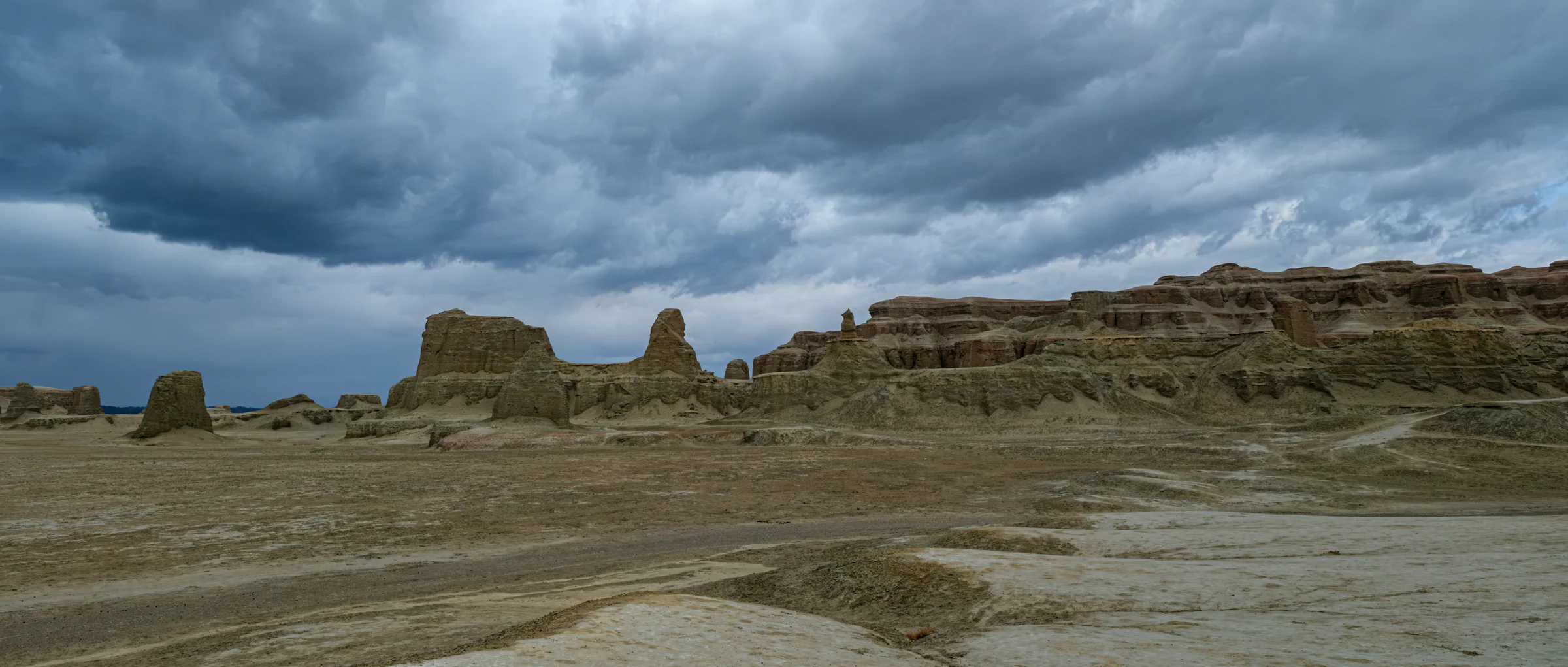
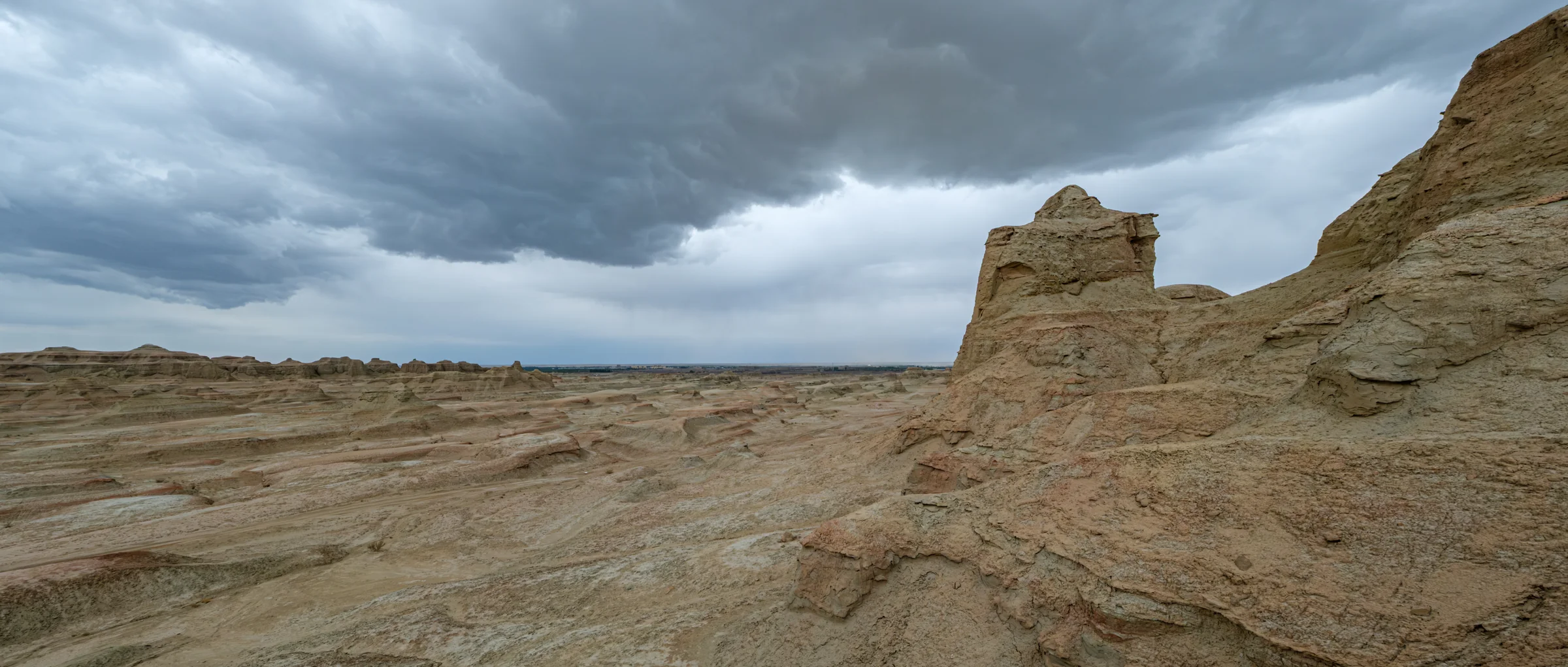
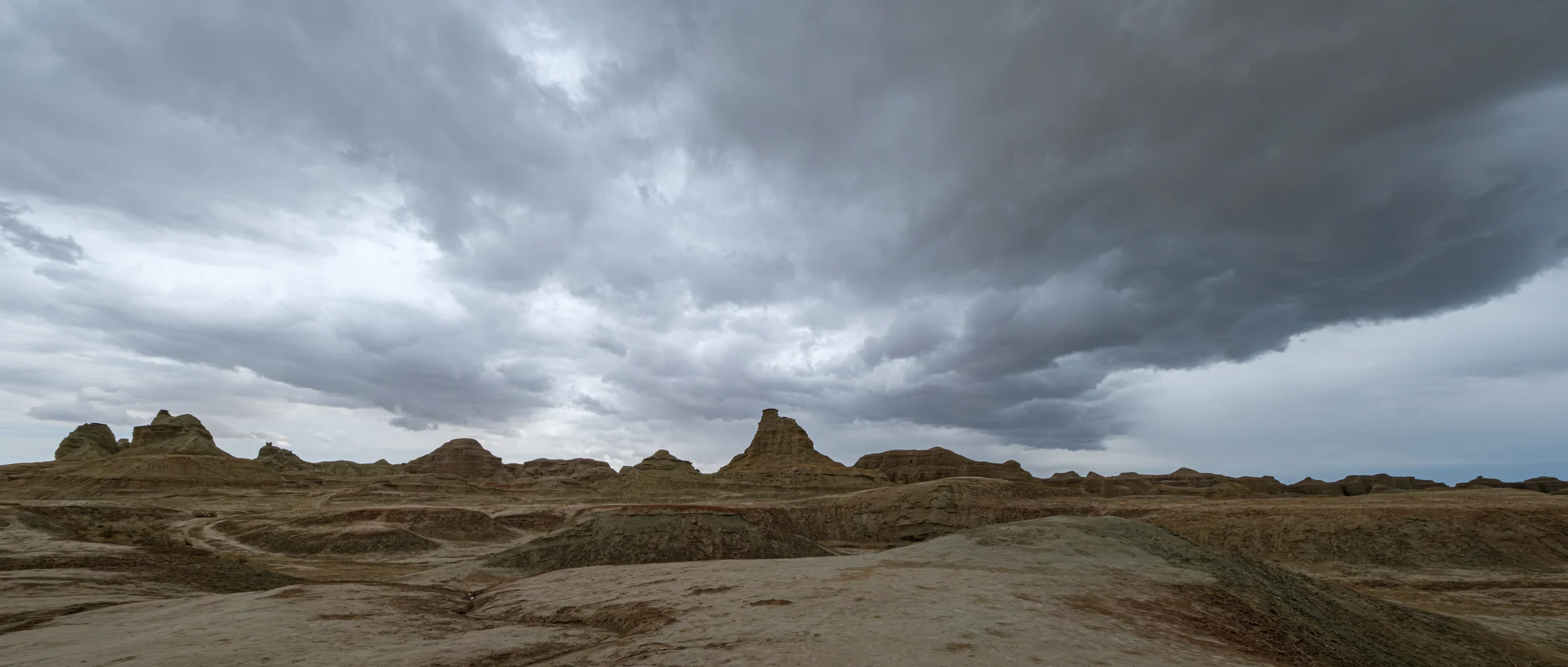
Wuerhe Ghost City, Xinjiang: Yardang Landforms and Wind
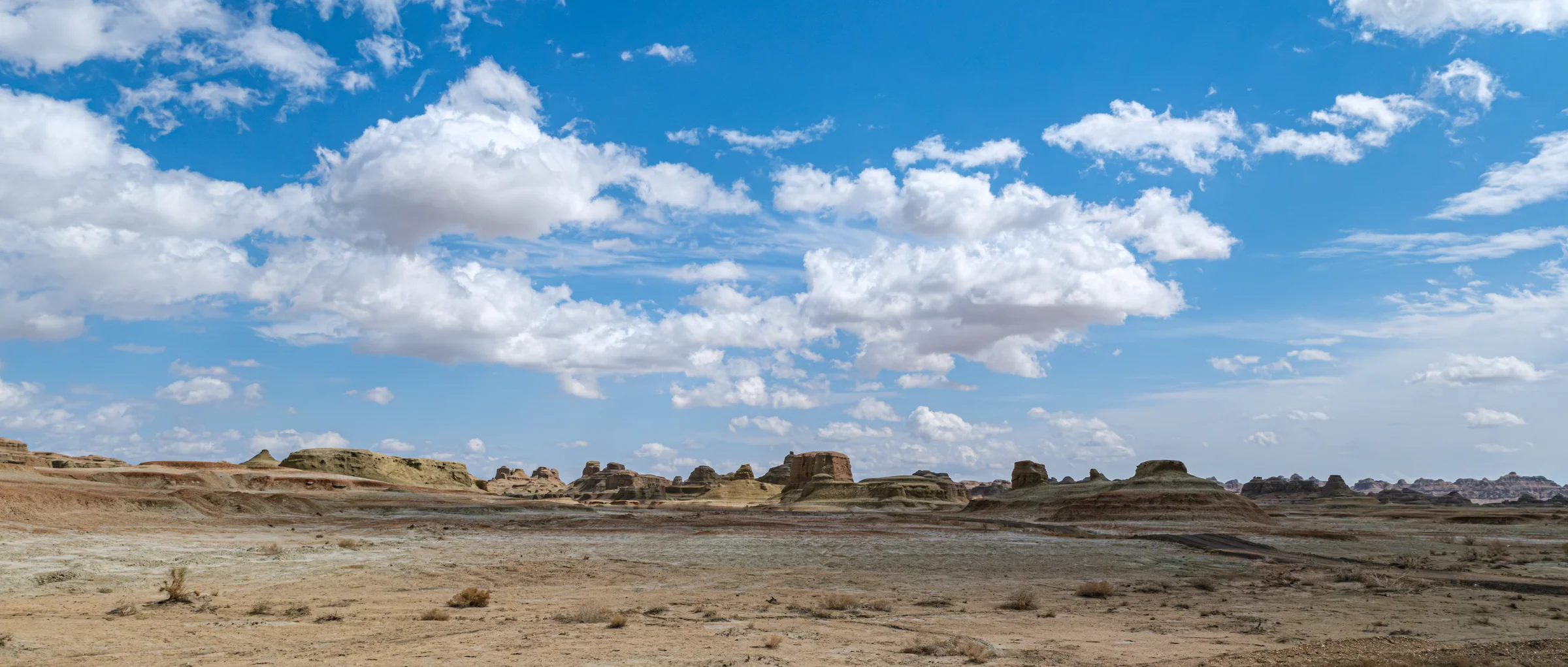
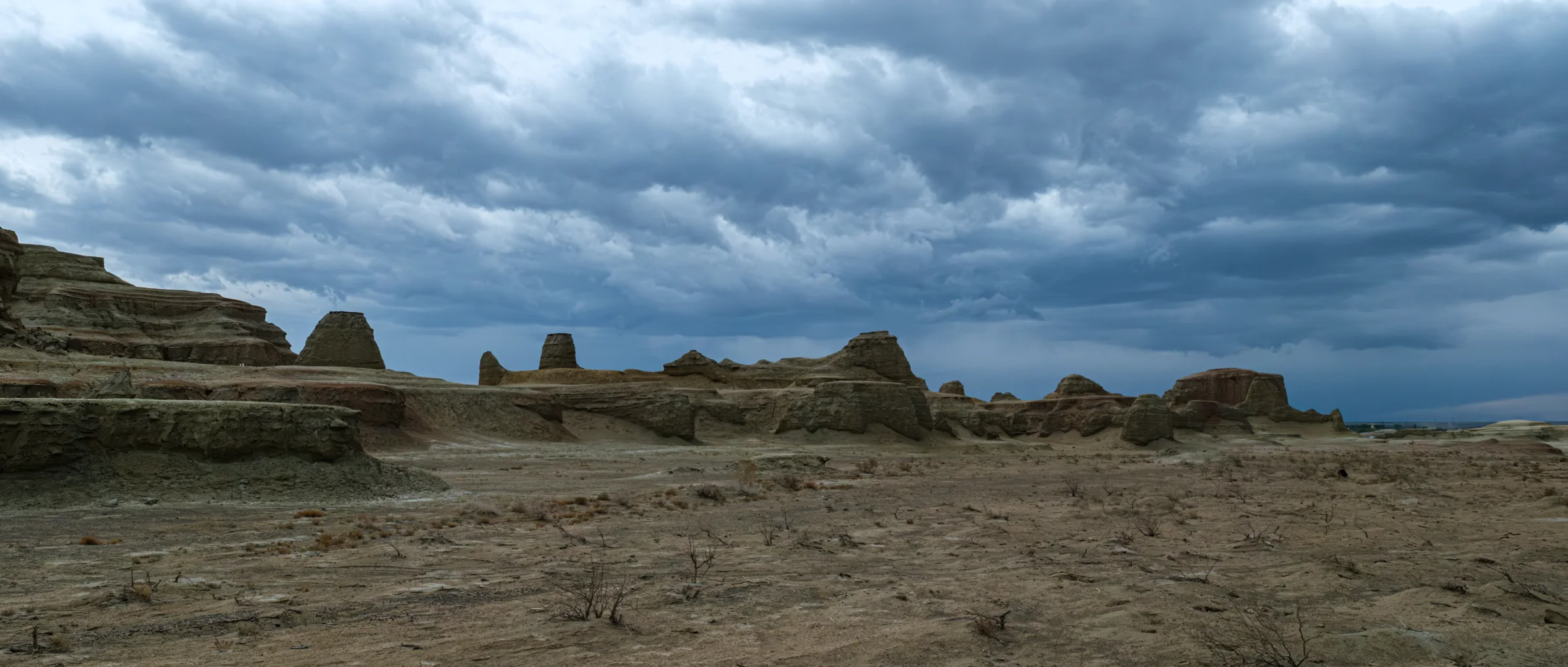
Wuerhe World Ghost City (Wuerhe Ghost City) is in Wuerhe District, Karamay, Xinjiang — a textbook yardang landform, wind-eroded over millions of years into castles, ships, and animal shapes.
Yardang Landforms
“Yardang” is a Uyghur word meaning “steep little hill.” Ghost City is the most famous one. Hundreds of millions of years ago this was a giant freshwater lake; the sedimentary layers were lifted by tectonic movement, then sculpted by the year-round northwest wind from the Junggar Basin. Softer rock wore away; harder rock remained — leaving the castles, fleets, and monsters you see today.
The scenic area covers about 10 square kilometers. A small train loops in 1.5 hours, with stops at six viewing platforms. Best photo time is sunset — the warm light turns every mound orange-red.
The Wind
The “Ghost” in the name comes from the wind. The Junggar Basin wind pours in from the northwest, channeling between the rocky hills, making all kinds of sounds — sometimes weeping, sometimes horns, mixed with the hiss of sand. Local herders call it “ghosts crying and wolves howling.”
The day I went the wind was mild; I only heard a low moan in the distance. But the yardang at sunset was already striking enough.
In Wuerhe
From Karamay city it’s about an hour’s drive. Most visitors and photographers stay in Karamay or Wuerhe town, enter the park at sunset, and return at dawn the next day for sunrise. Outside the park there are paragliding and 4x4 tours, but the wind-eroded landscape alone is worth the ticket.

