Taikang: Red Walls, Ridge Beasts, and a Treasury of Art
Taikang gave me two halves of a day.
The morning was a temple in the hills. The afternoon was an art treasury in town. Neither took more than two hours, but a whole afternoon of light came between them.
Outside the Gate
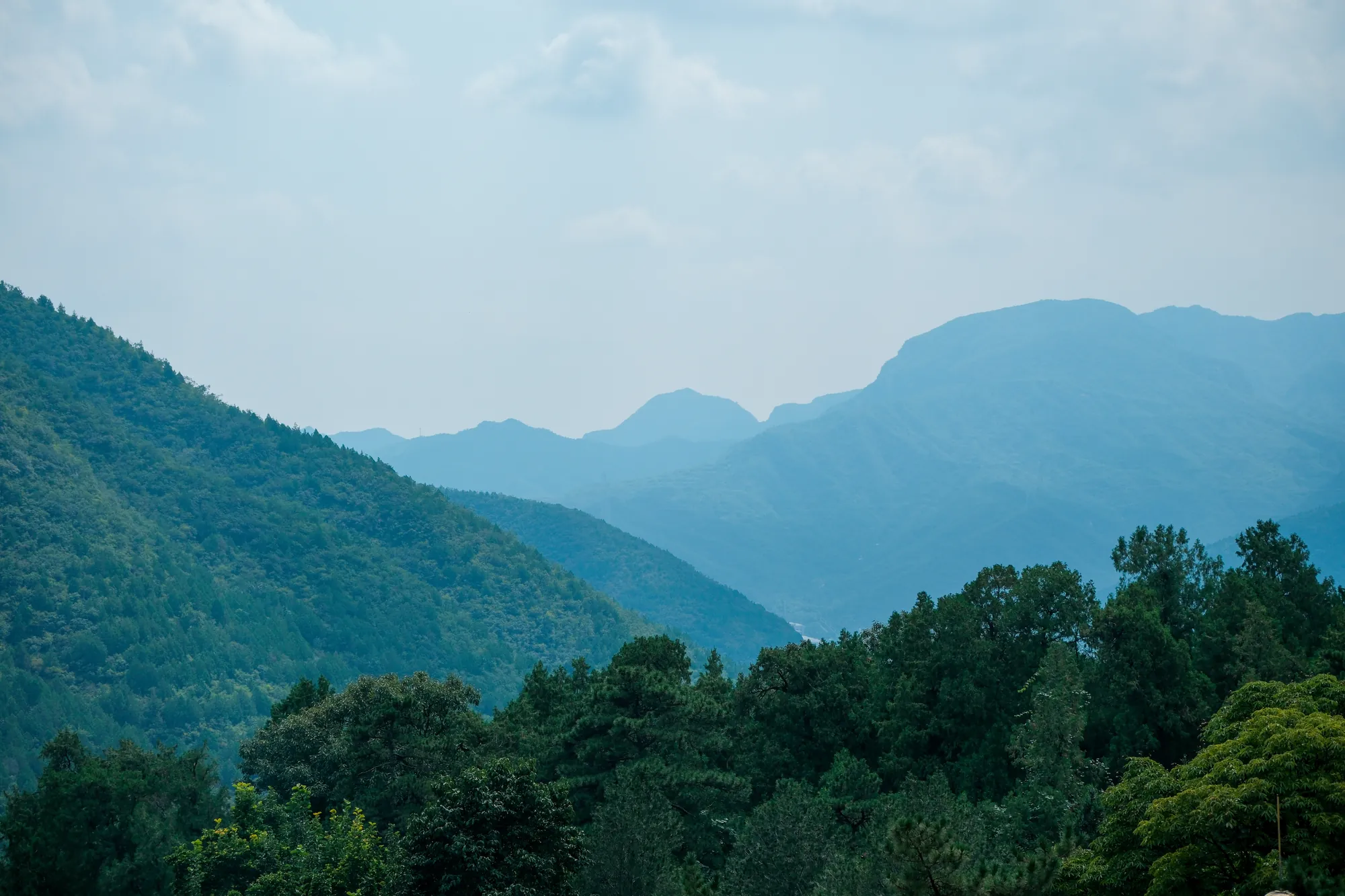
The road up had slopes on both sides, green to the point of darkness.
The sky was an unreal blue with only a thin veil of cloud. The ridge line rose and fell in the distance, each layer paler than the one in front. Trees covered half the hillside and left one roof showing — yellow, small, a point dropped into the forest.
A Character Cut in Rock
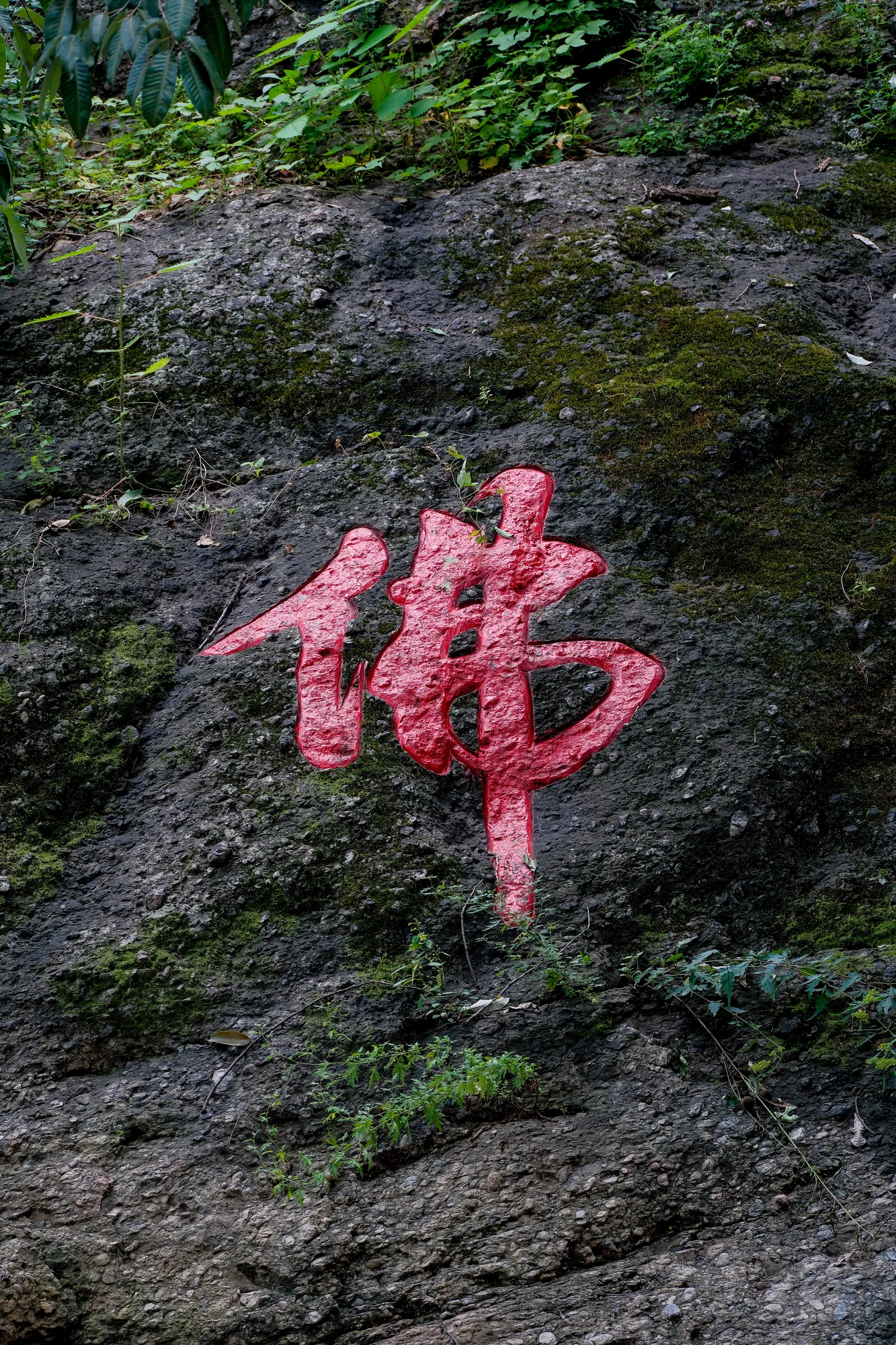
There was a character cut into the rock.
Red. Carved in strokes large enough to require standing back and looking up. Weathering had pitted the strokes and last year’s soil had collected in the cuts. The carving is fierce but has gone blunt.
The Red Wall
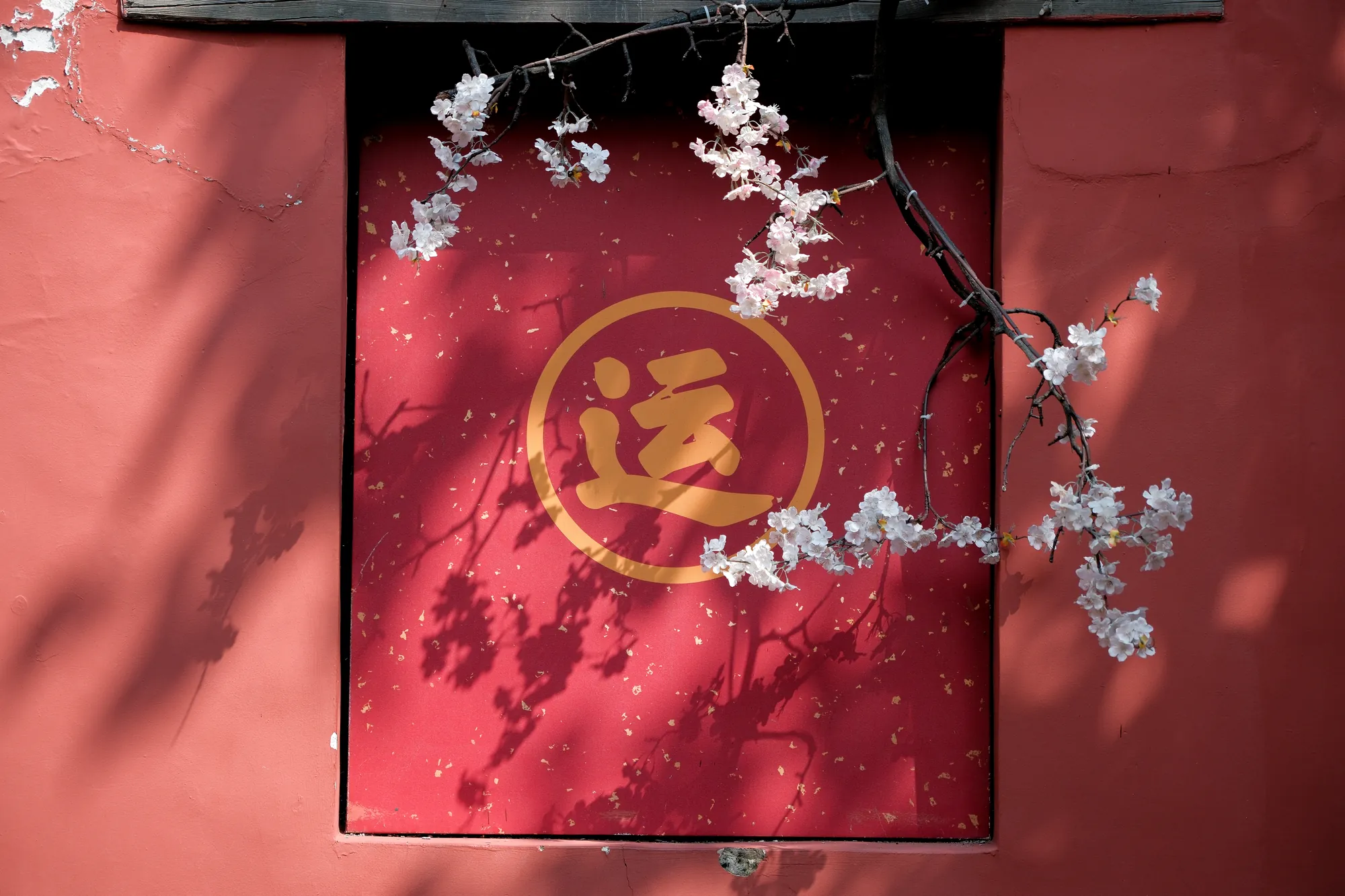
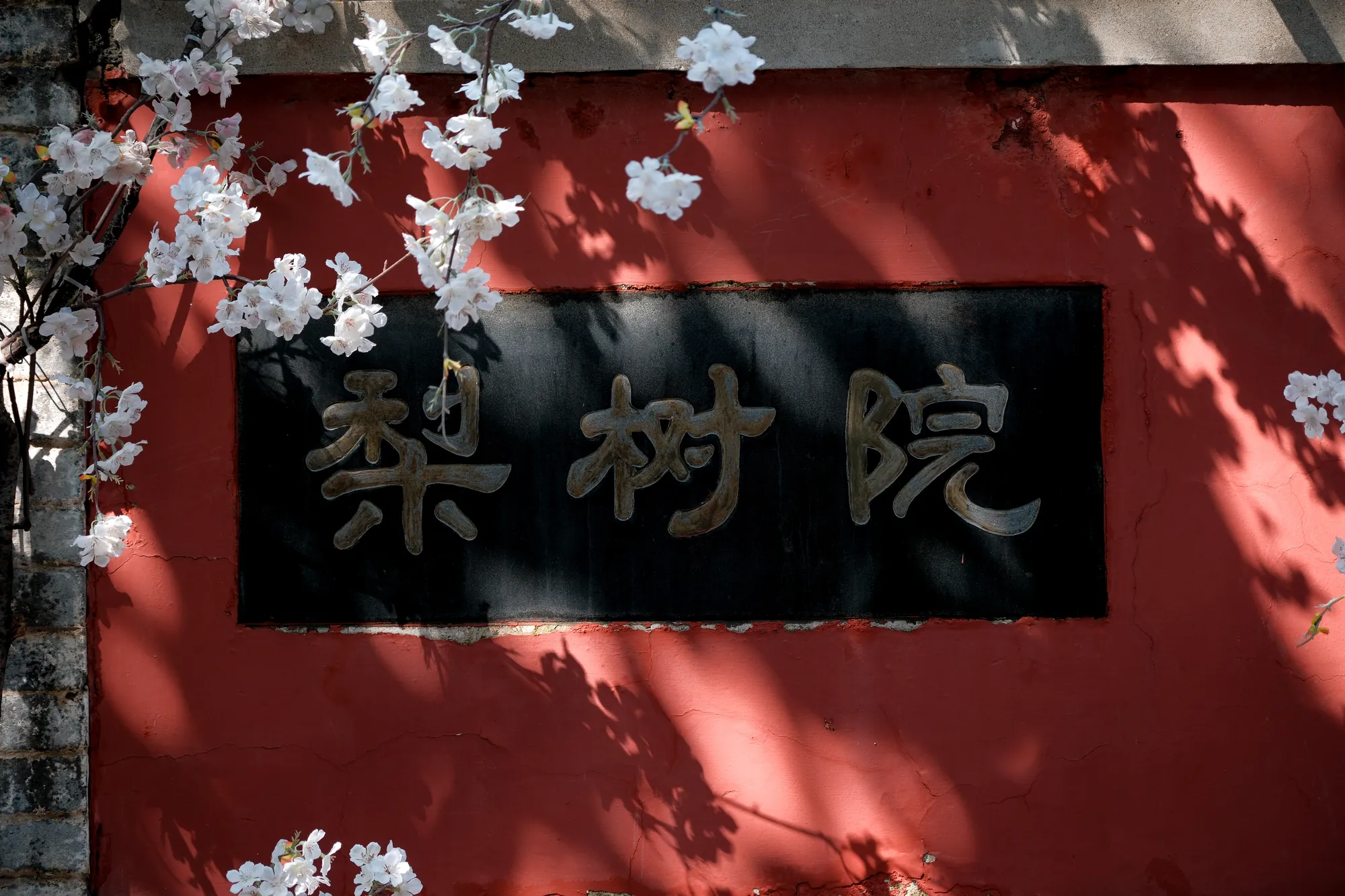
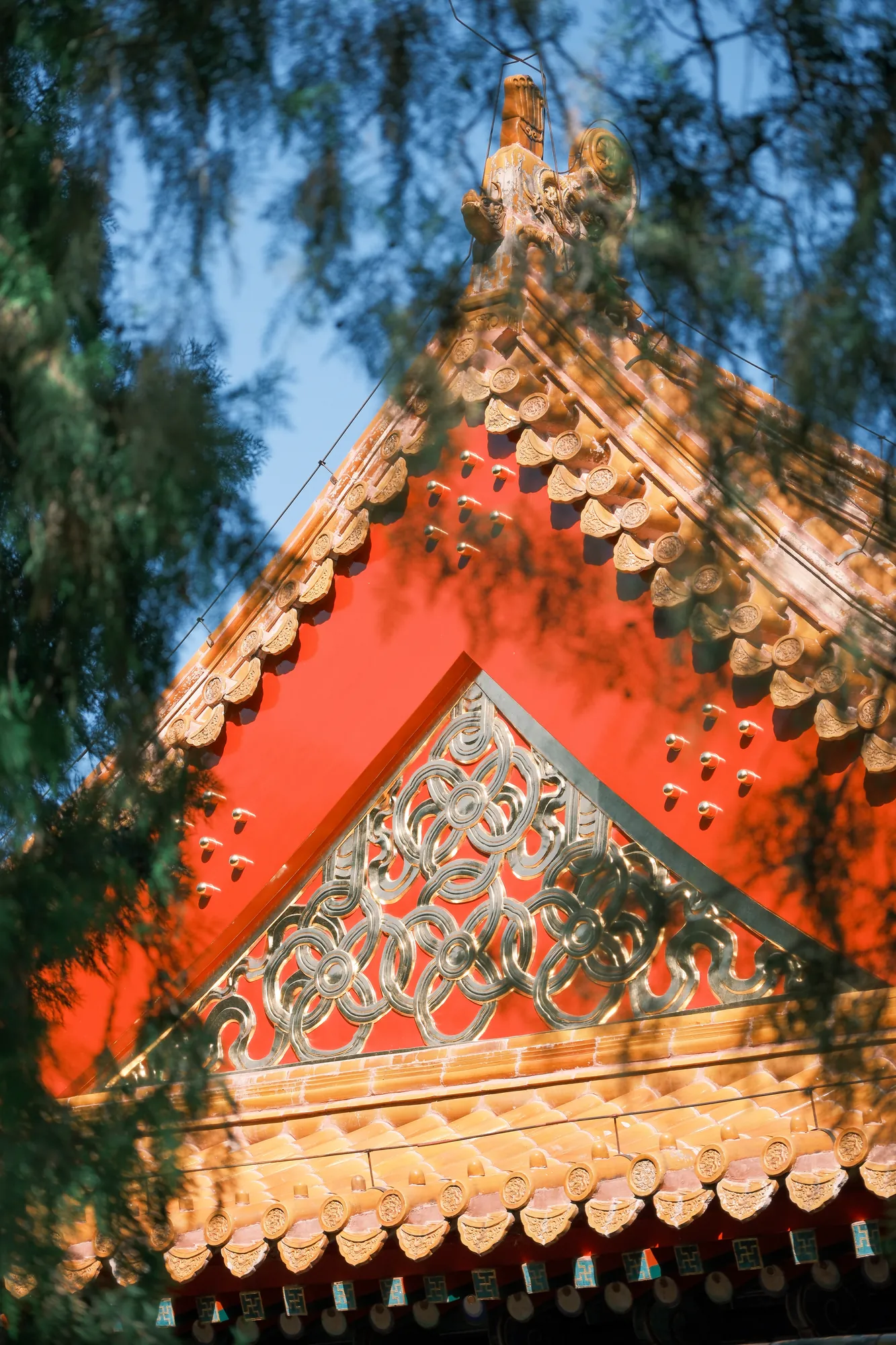
The temple walls are red — the old red, the shade that settles between brick and dried blood after a summer of sun and a winter of frost.
A begonia-shaped window is cut into the wall. Sunlight filtered through the leaves outside throws broken patches across the red, and the shape of the patches is the shape of the window, only shattered. When the wind moves, the patches move with it.
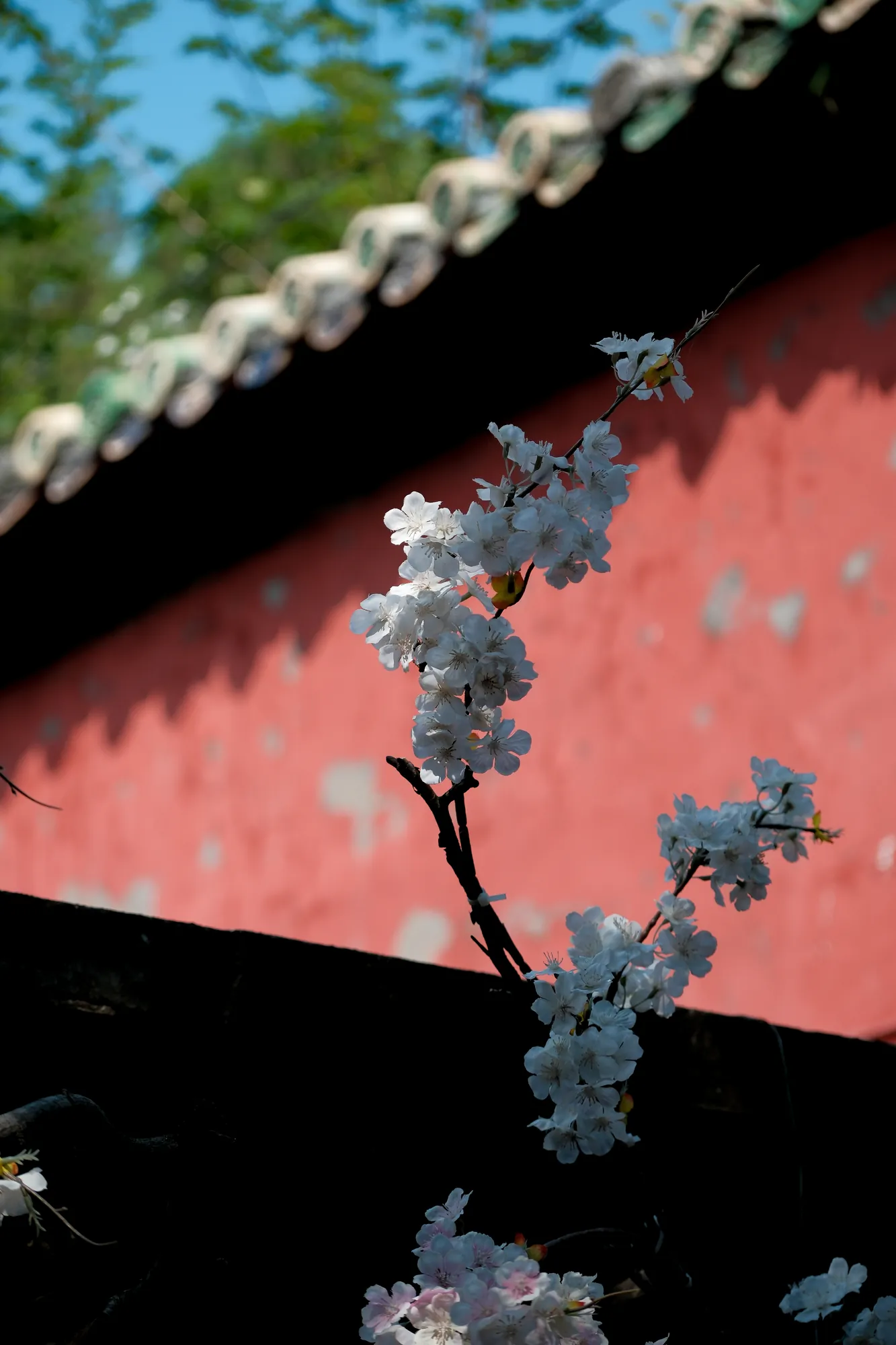
A branch of white plum reaches out from the corner of the wall.
The flowers are mostly over; a few are still hanging on, thin and a greyish white. The branch is so fine it reads like a stroke of dilute ink crossing the red.
Ridge Beasts
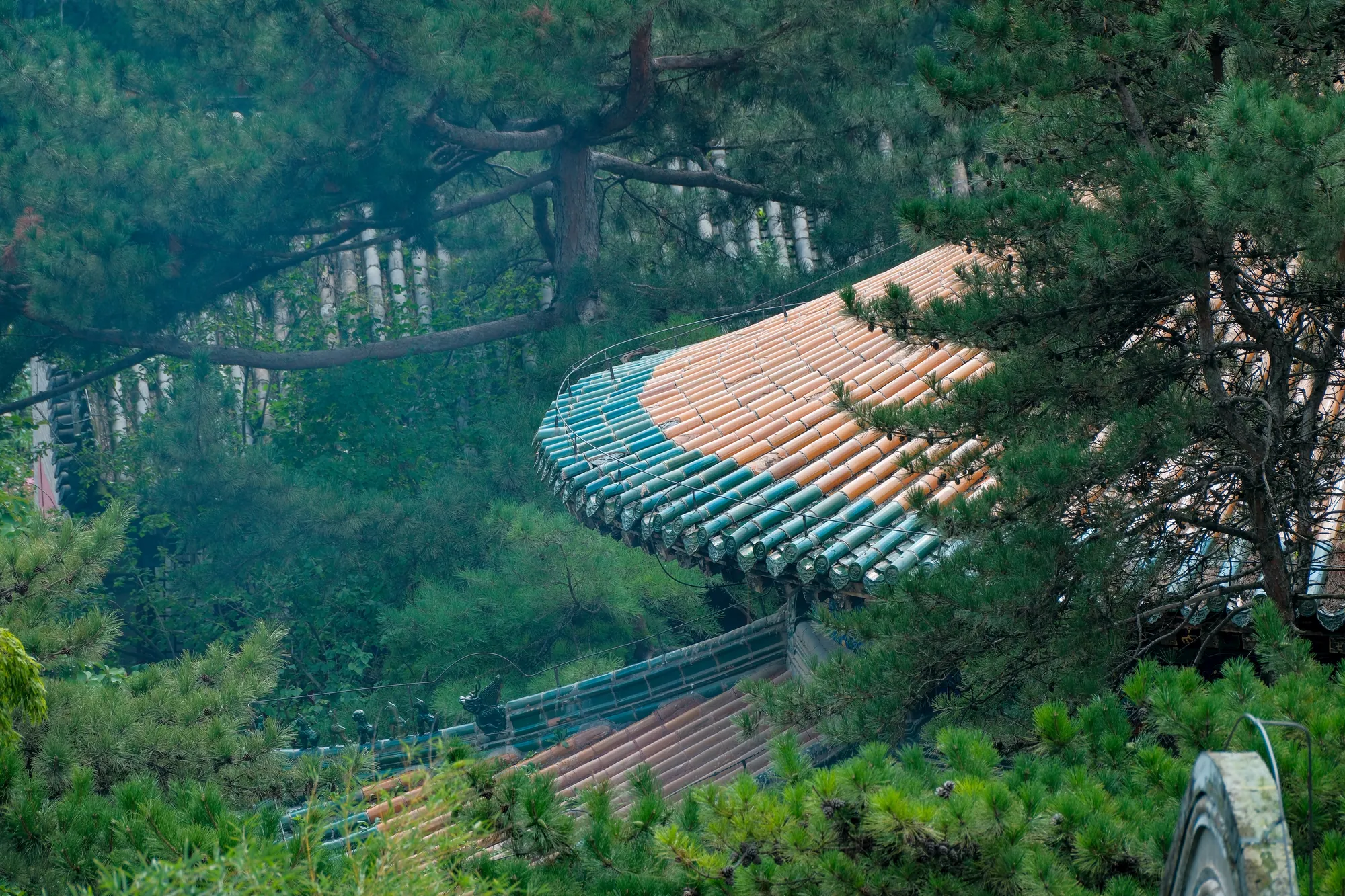
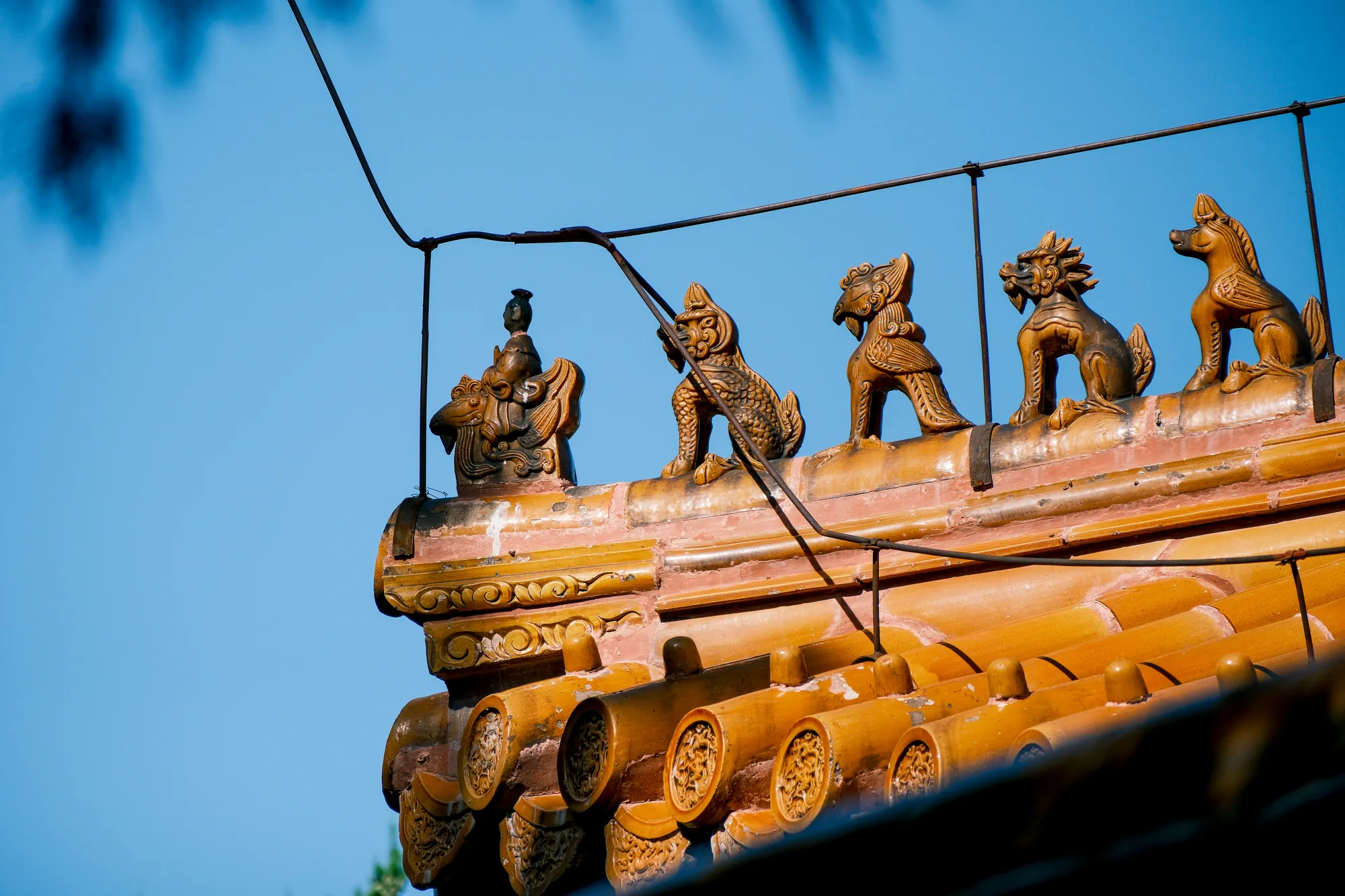
The roof ridge is green.
Glaze fired dark comes out this colour — not jade green but ink green with a little blue in it. Light does not make it shine; it only deepens the colour. Small beasts crouch along the end of the ridge, one after another, heads up, and you can make out the manes on their necks.
Against a blue sky they look very small indeed.
A Magpie
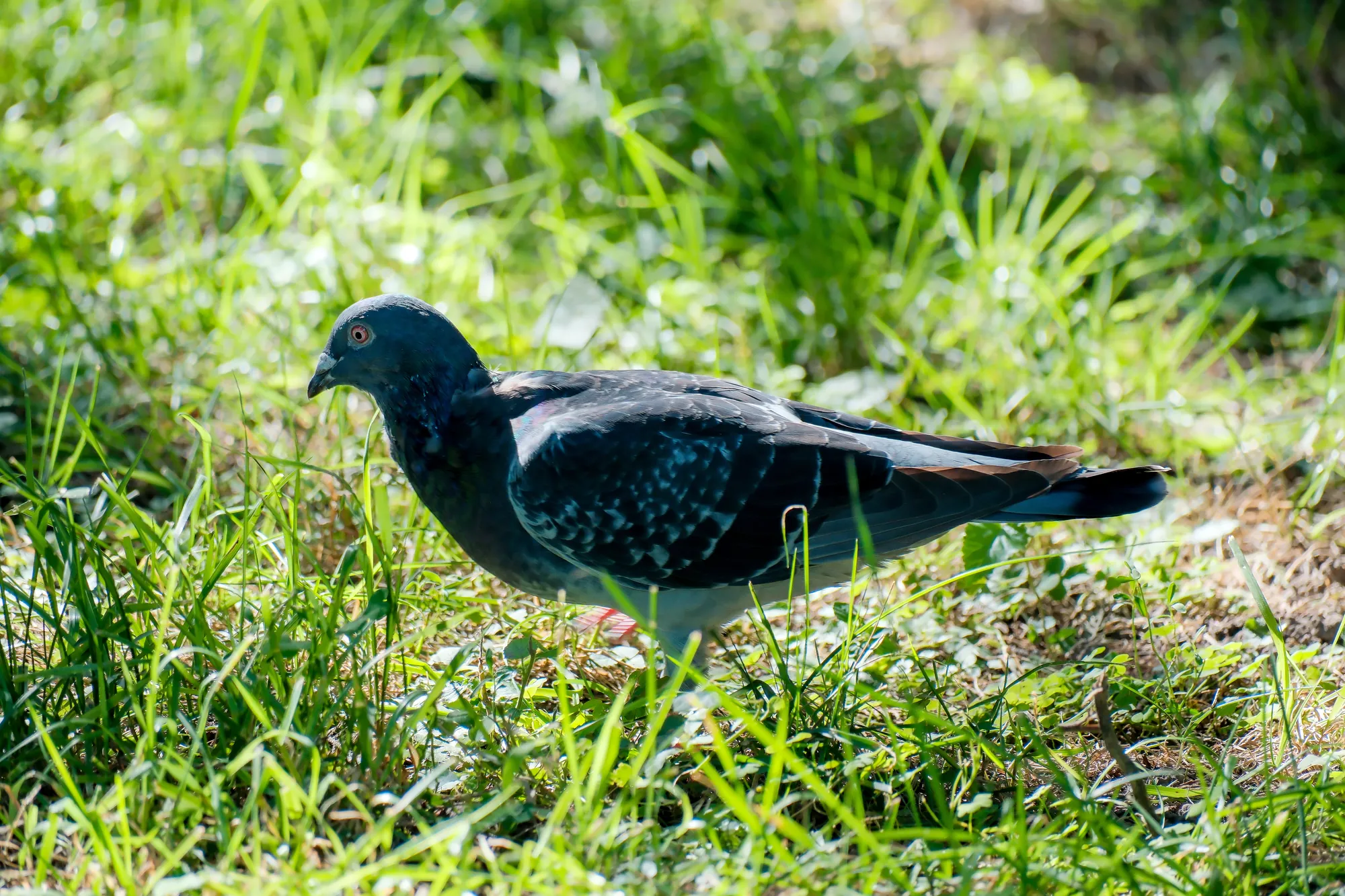
There was a magpie in the grass.
Black, with a white bar on the wing and a tail longer than its body, standing still in the grass and looking straight at the lens. It was standing on a slope, and the grass was pressed flat in a pale patch around it.
A Bench and a Lamp
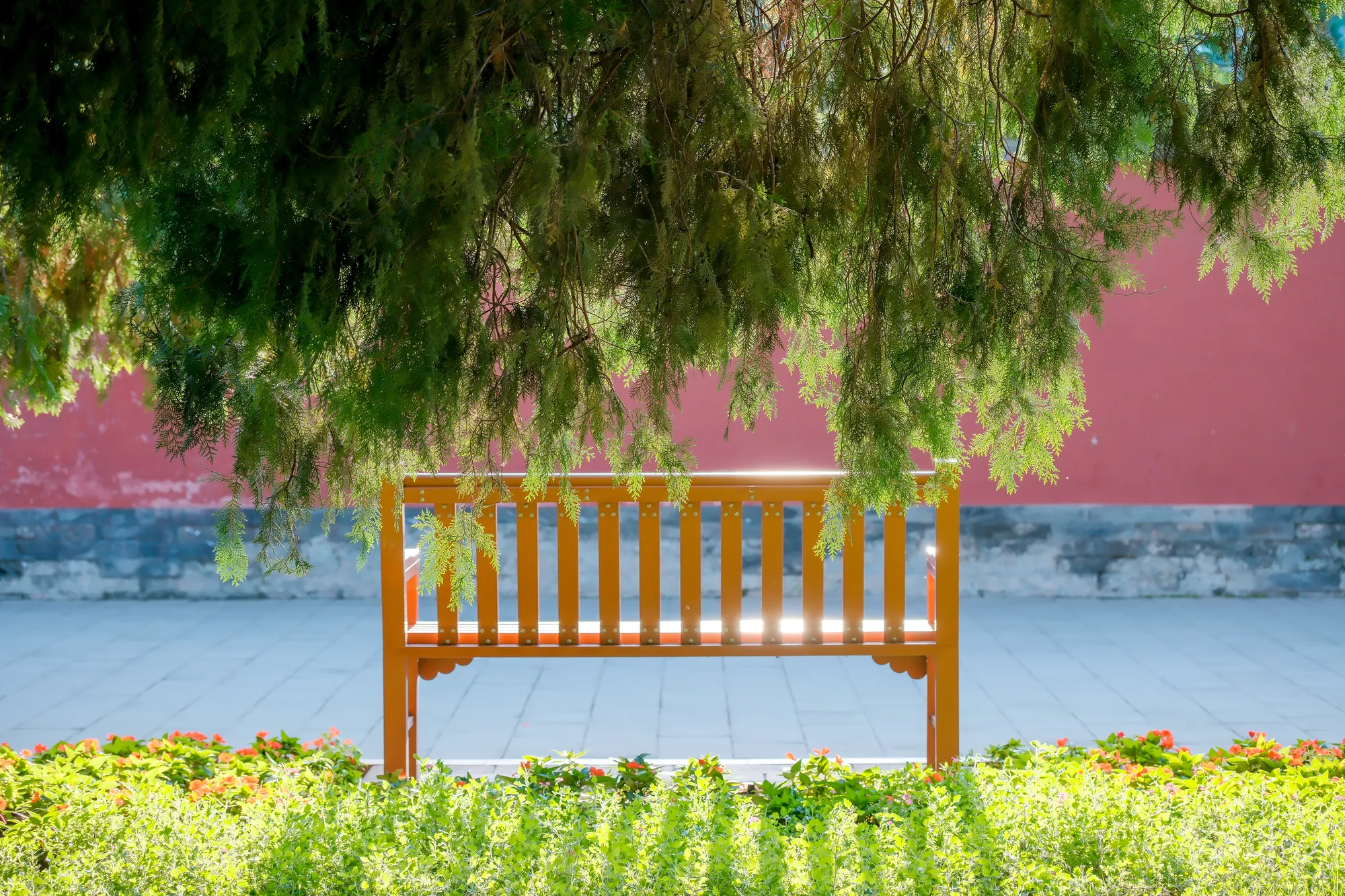
At the foot of the wall stands a wooden bench, painted yellow, with half the paint gone.
Behind it hang willow branches, thin strands swinging in the wind. It was the only place on that whole path where there was shade to get into.
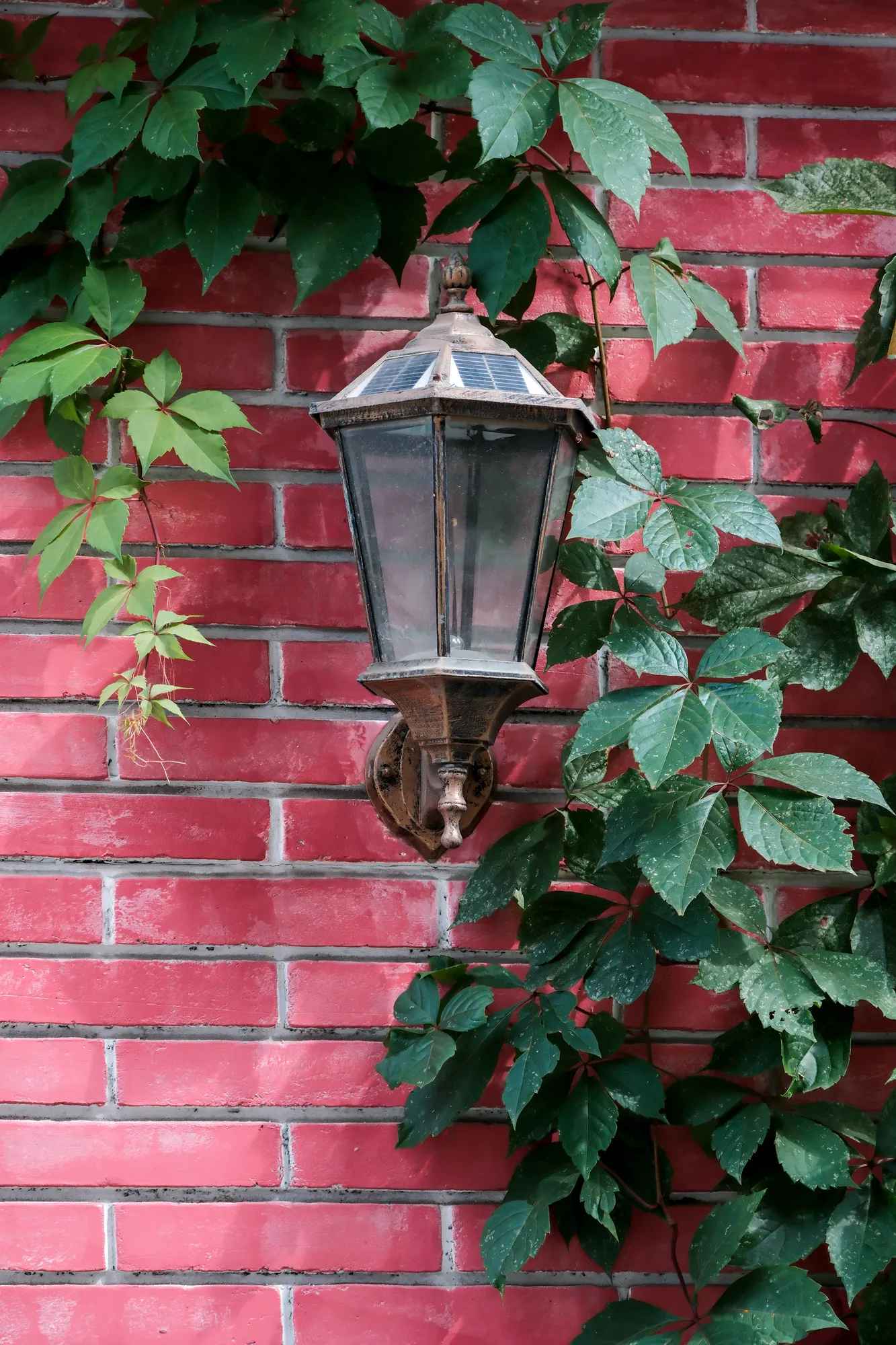
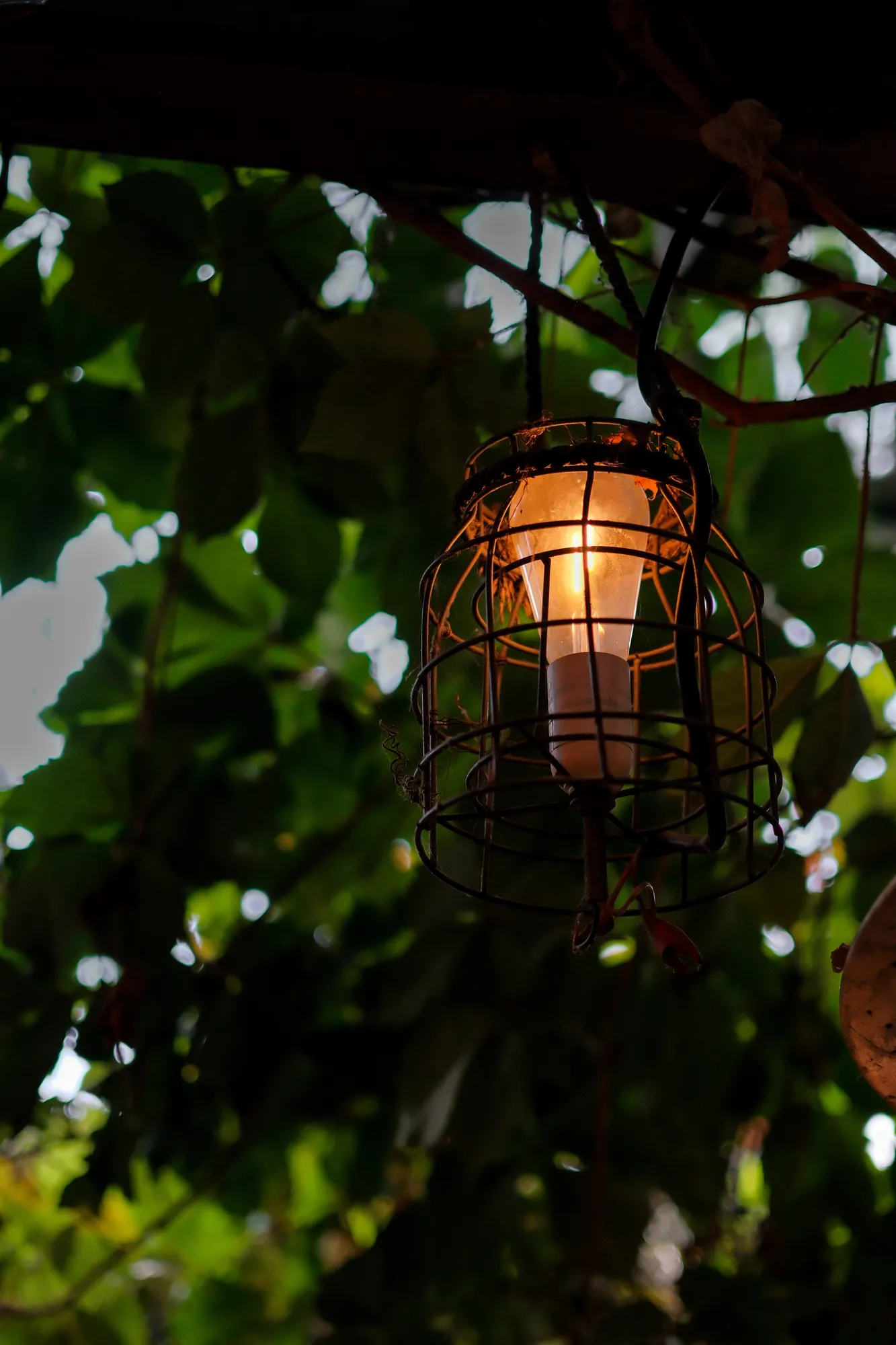
On another red brick wall, vines have covered the mortar entirely, and a lamp hangs among them. It is an old-fashioned one with a wrought-iron pattern on the shade, with leaves crowding in around it as if someone had pushed the lamp into a hedge.
Grass and Mist
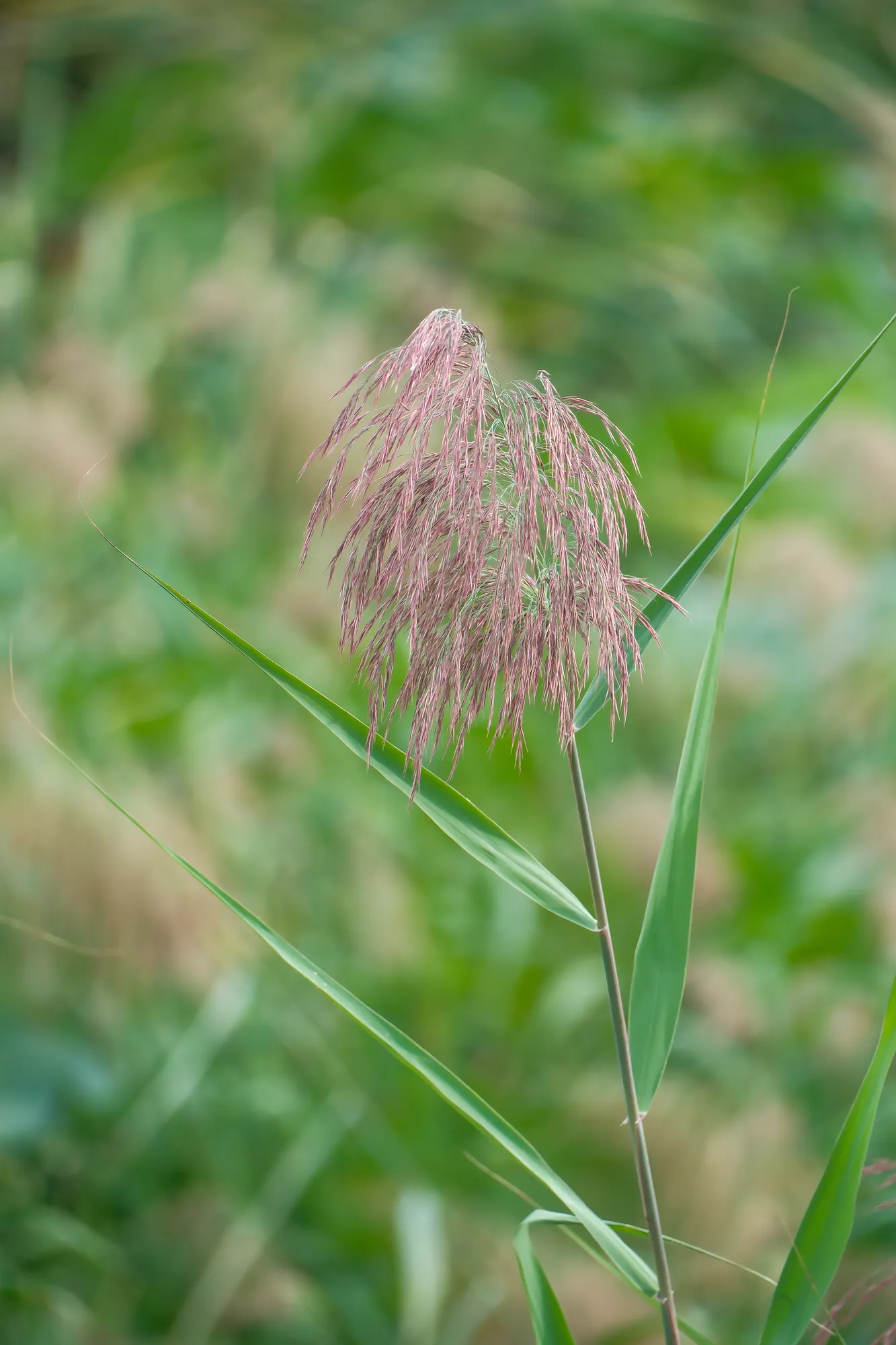
White fluffy flowers stand in the grass, one stalk at a time, round and soft, swaying when the wind moves.
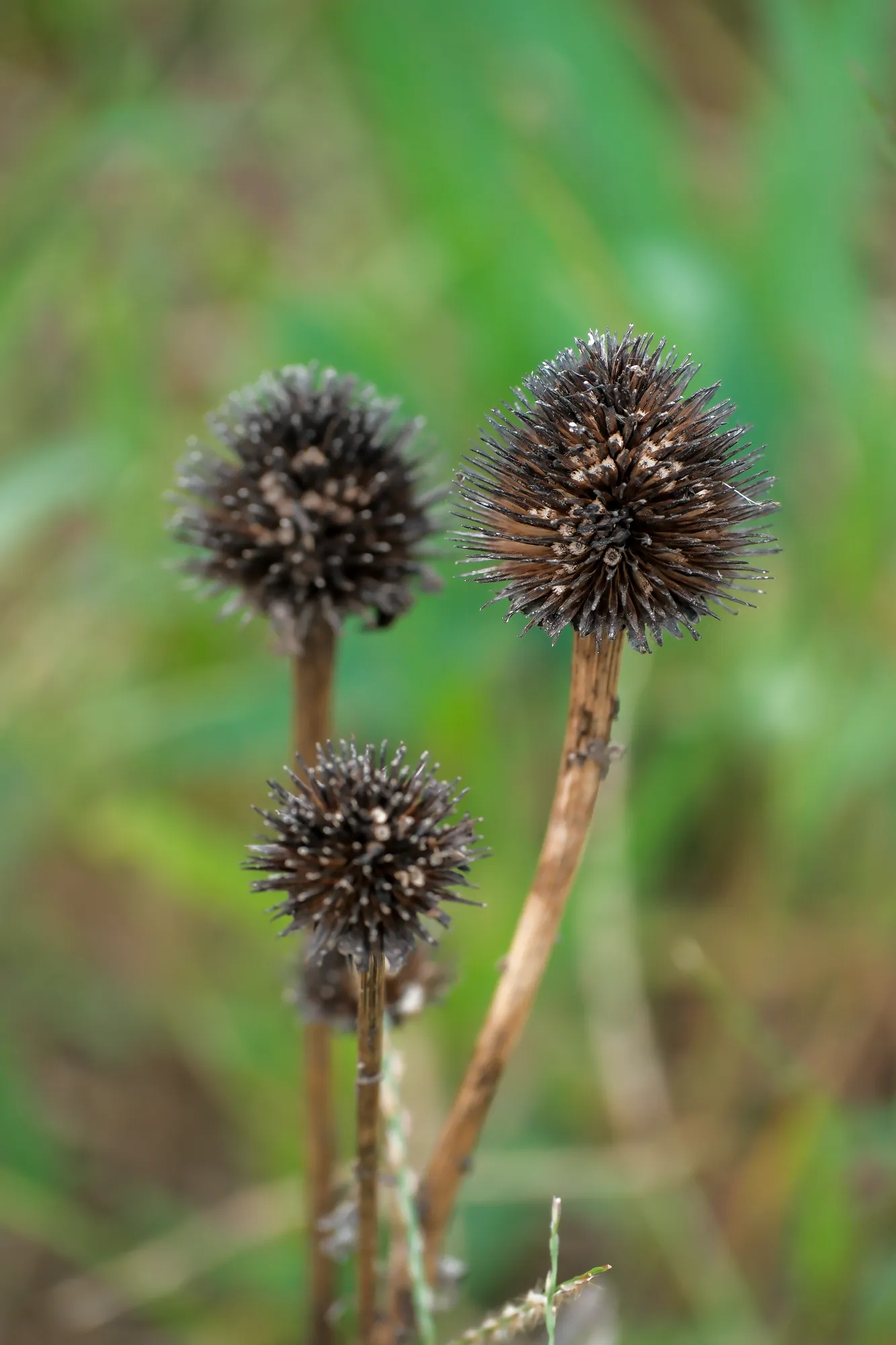
There were dead ones too: two brown seed heads, the fibres blown open, like two small burrs.
Further out, a white layer lay over the grass. Up close it turned out not to be mist but a thin sheet of ground vapour, lit from above so that it shone. The ridge behind it was barely there.
The Treasury
In town in the afternoon.
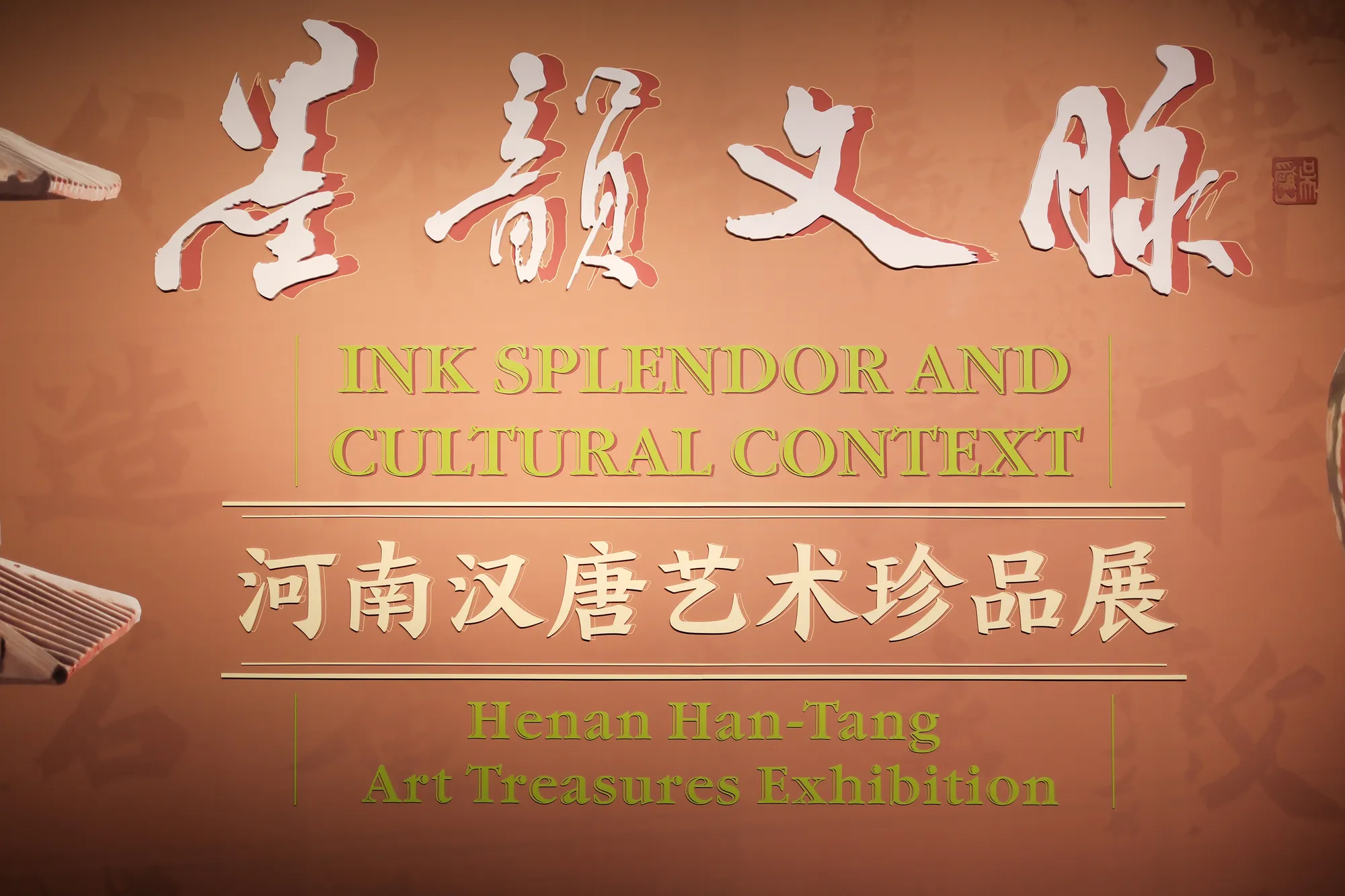
The sign at the door is wooden, brown, with white characters: 河南太康艺术珍品馆 — Taikang Art Treasury, Henan.
The light inside is dim and the objects glow on their own.
A Painted Pot
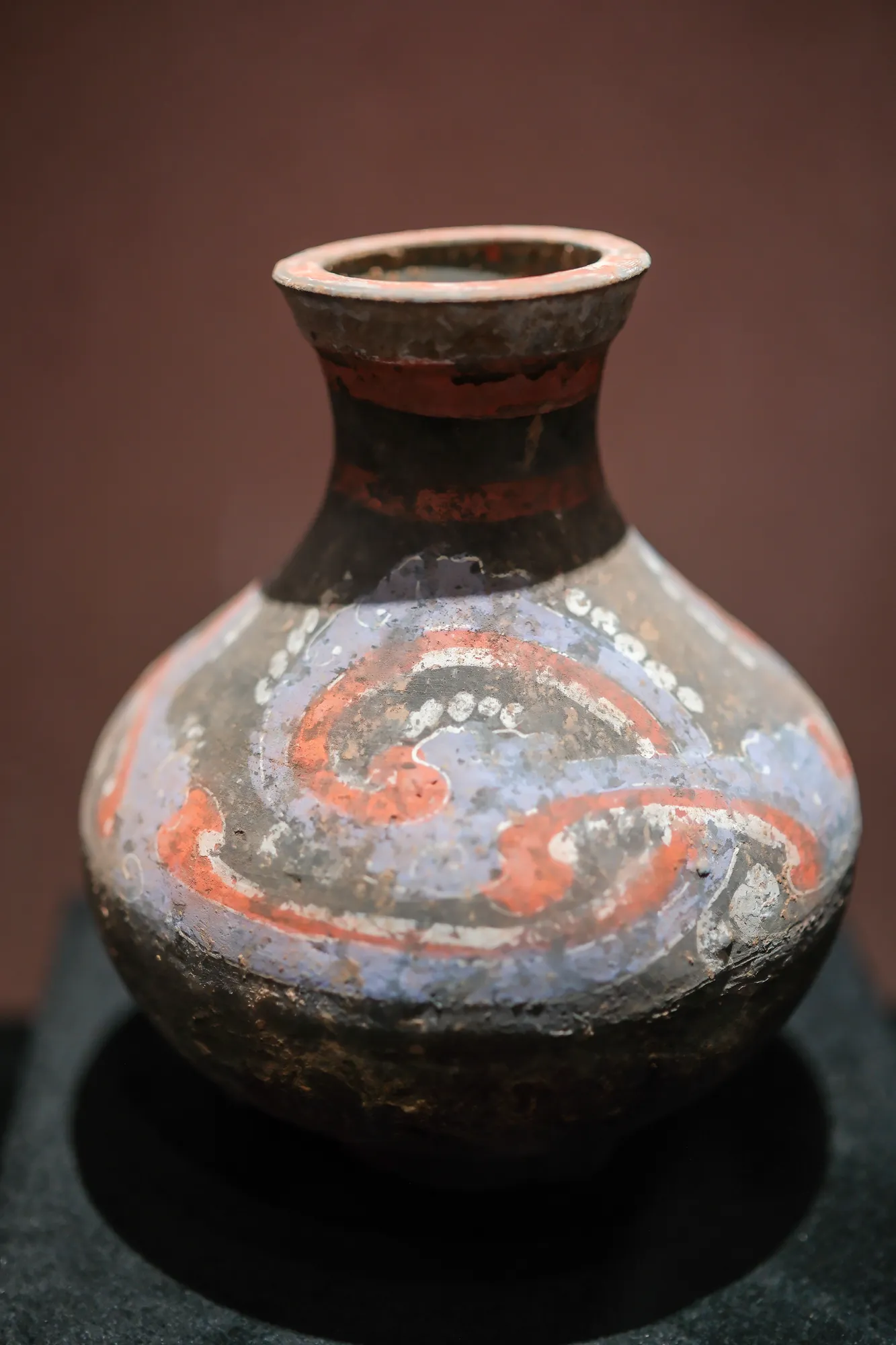
The most striking piece is a small pottery jar.
Round-bellied, short-necked, with the pattern drawn on the shoulder in black, red and white — abstract geometry running in bands. The dark ground lifts it right out, as if it were floating in black water.
A Jade Pendant
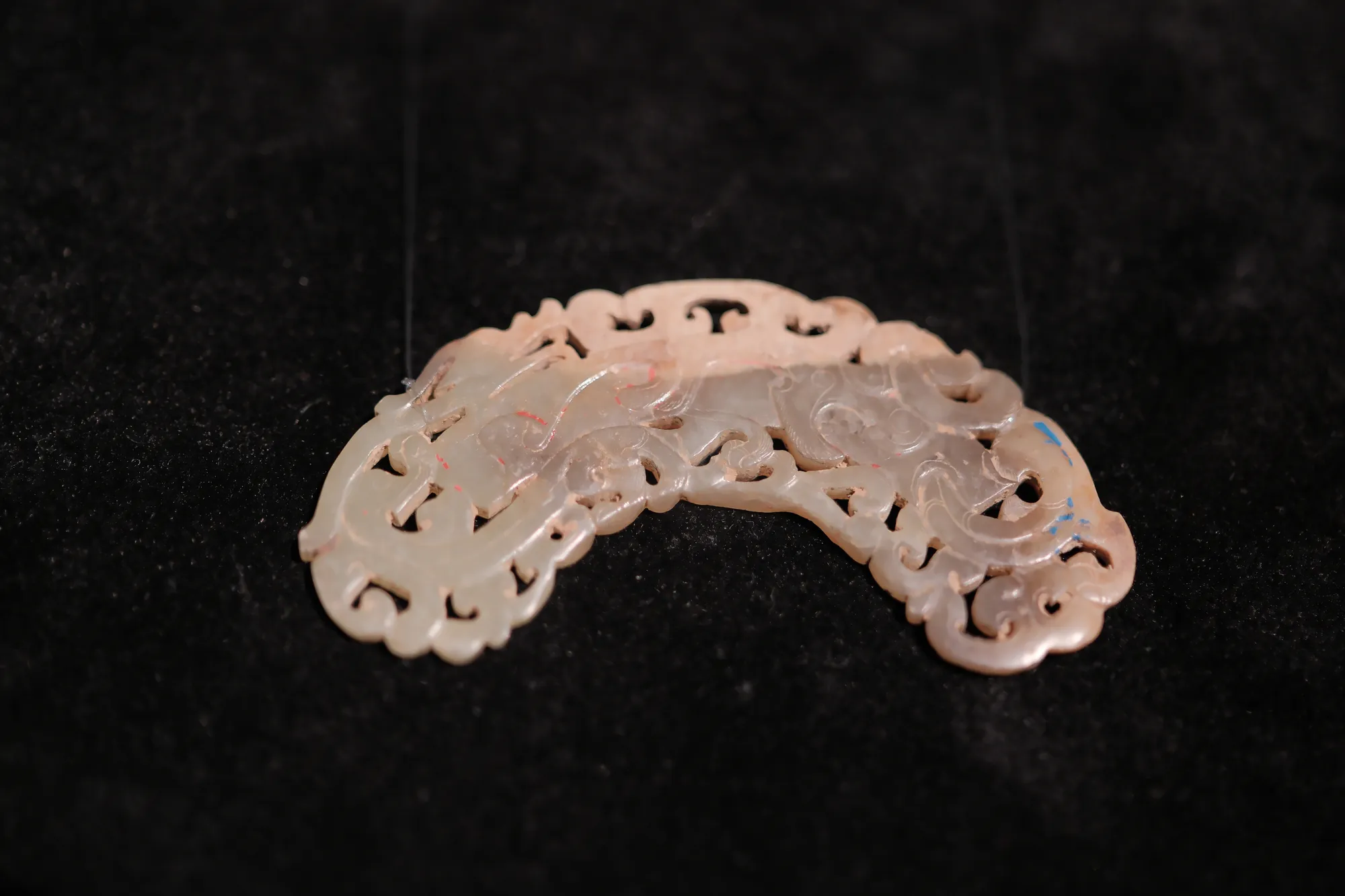
A crescent-shaped piece of jade, milky white with a little green in it, thin at the edge and translucent.
It lies on black velvet with the light coming from above, and the rim lights up. There are fine working marks on the surface.
Gold and Silver
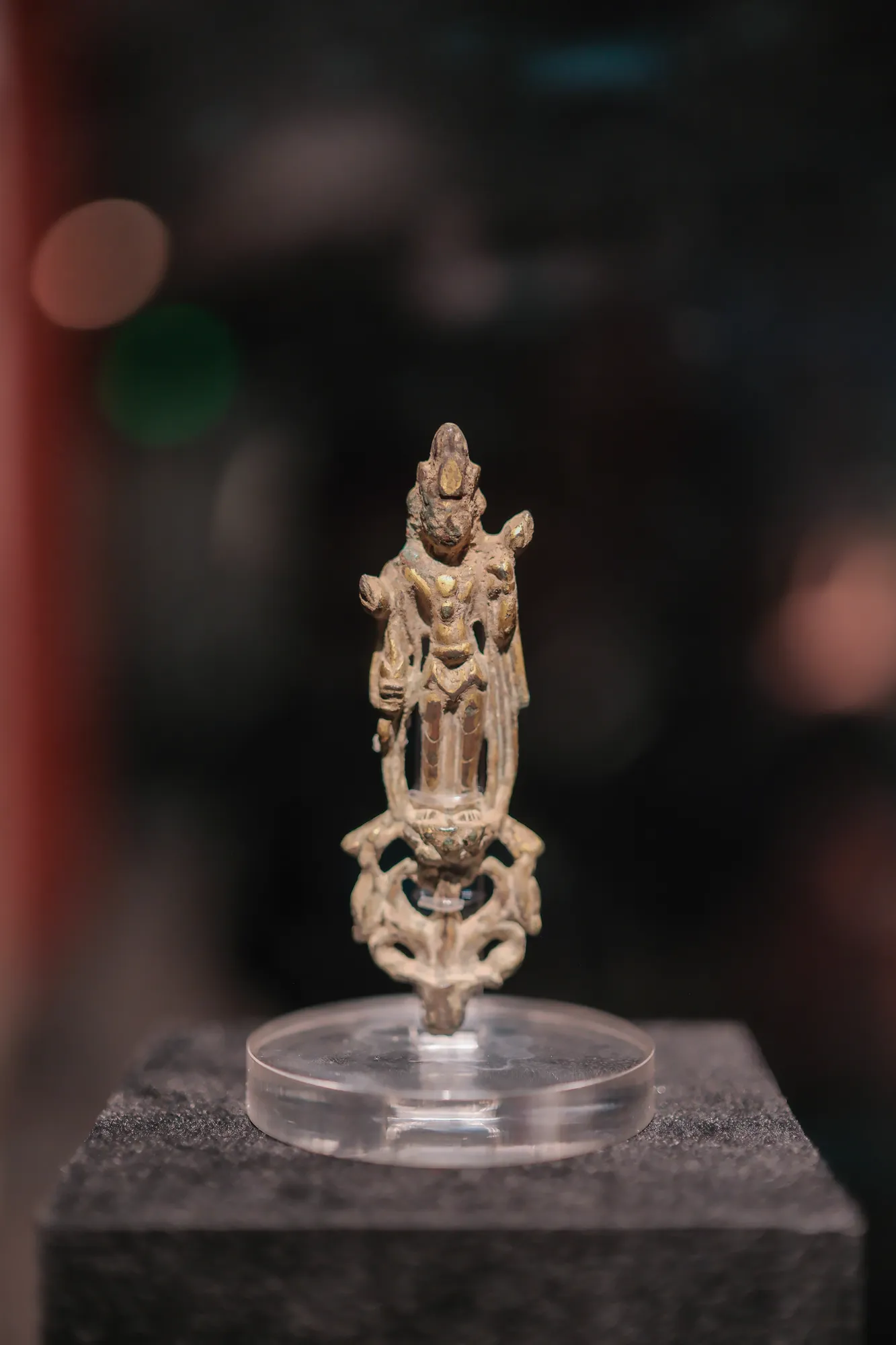
A small gilt pagoda-shaped ornament, and several chased silver pieces with lotus petals narrowing upward in tier after tier.
Stone Figures
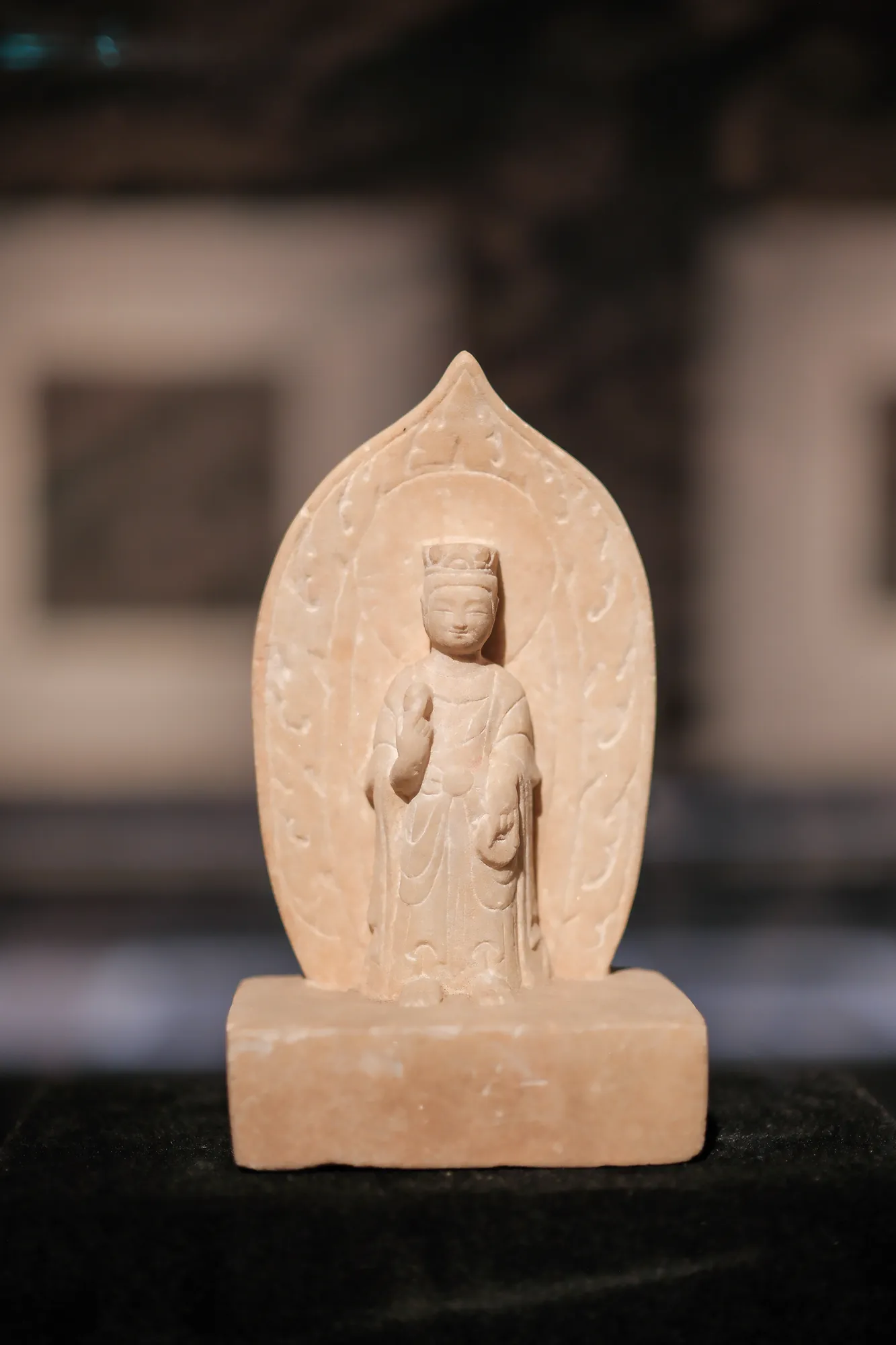
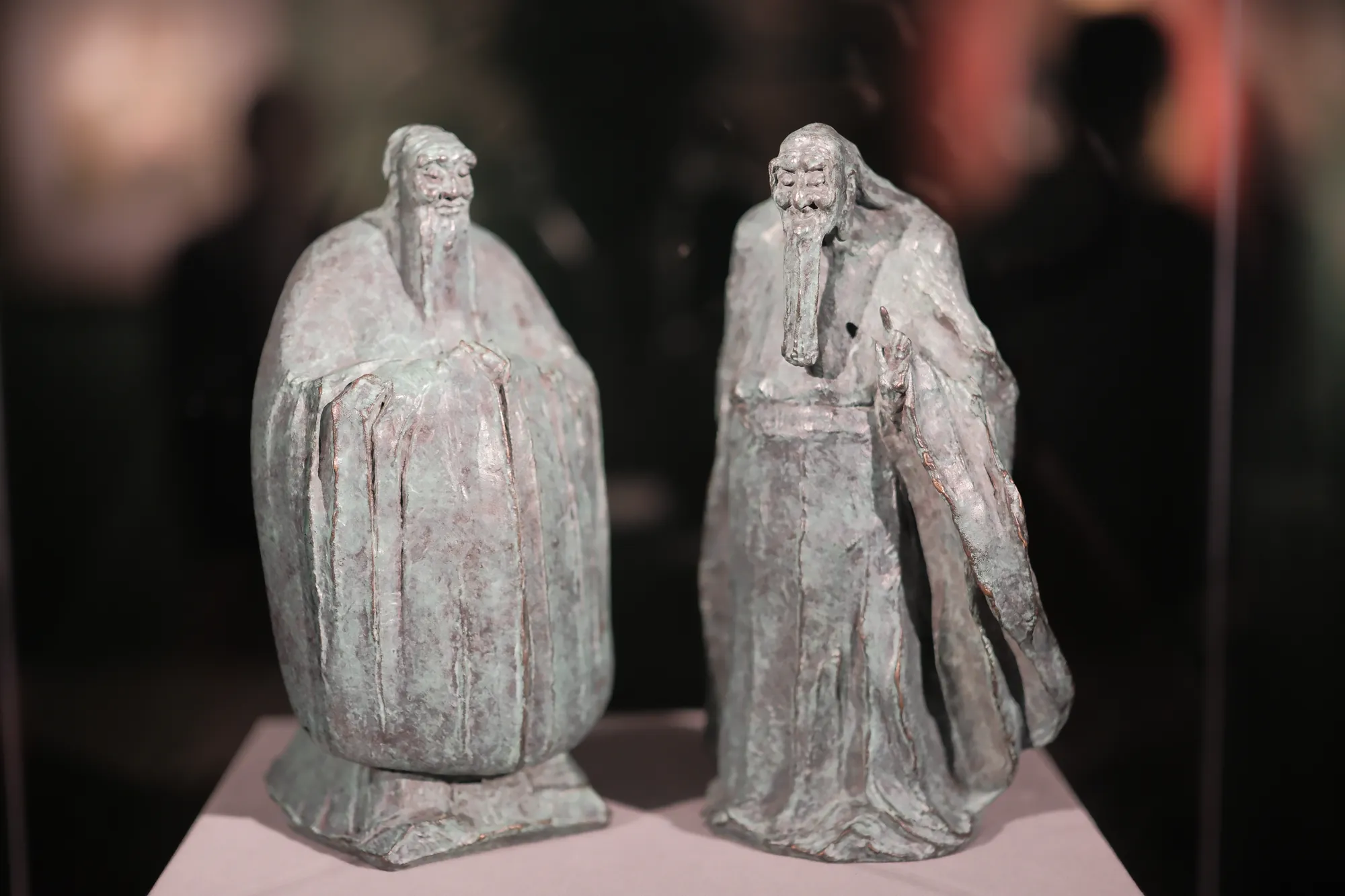
Two stone standing figures side by side, white stone, the drapery reduced to a few incised lines. Another stands alone on an oval base, its head tilted slightly.
The background is entirely black.
Paintings
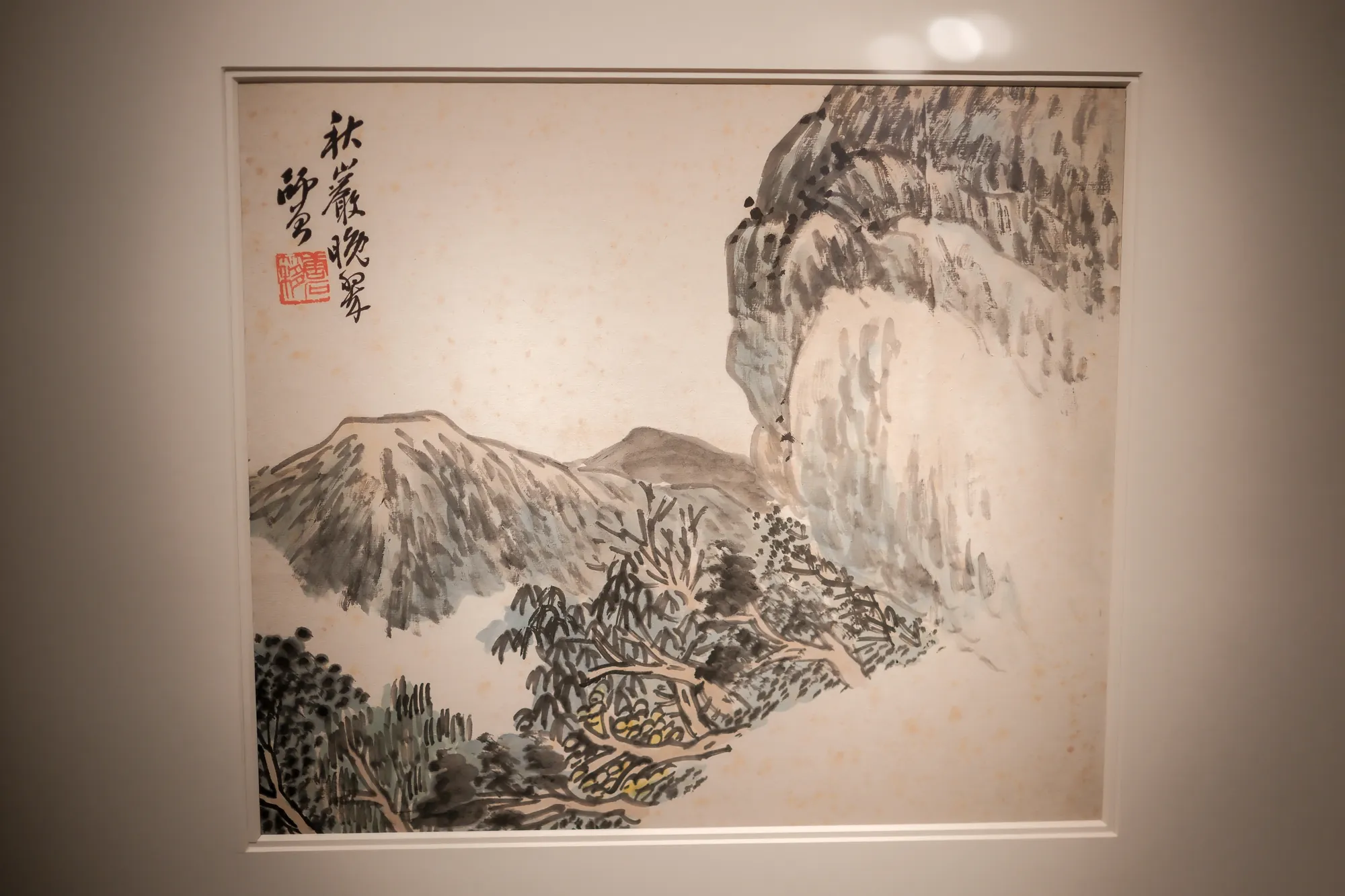
On the wall, a few framed old paintings.
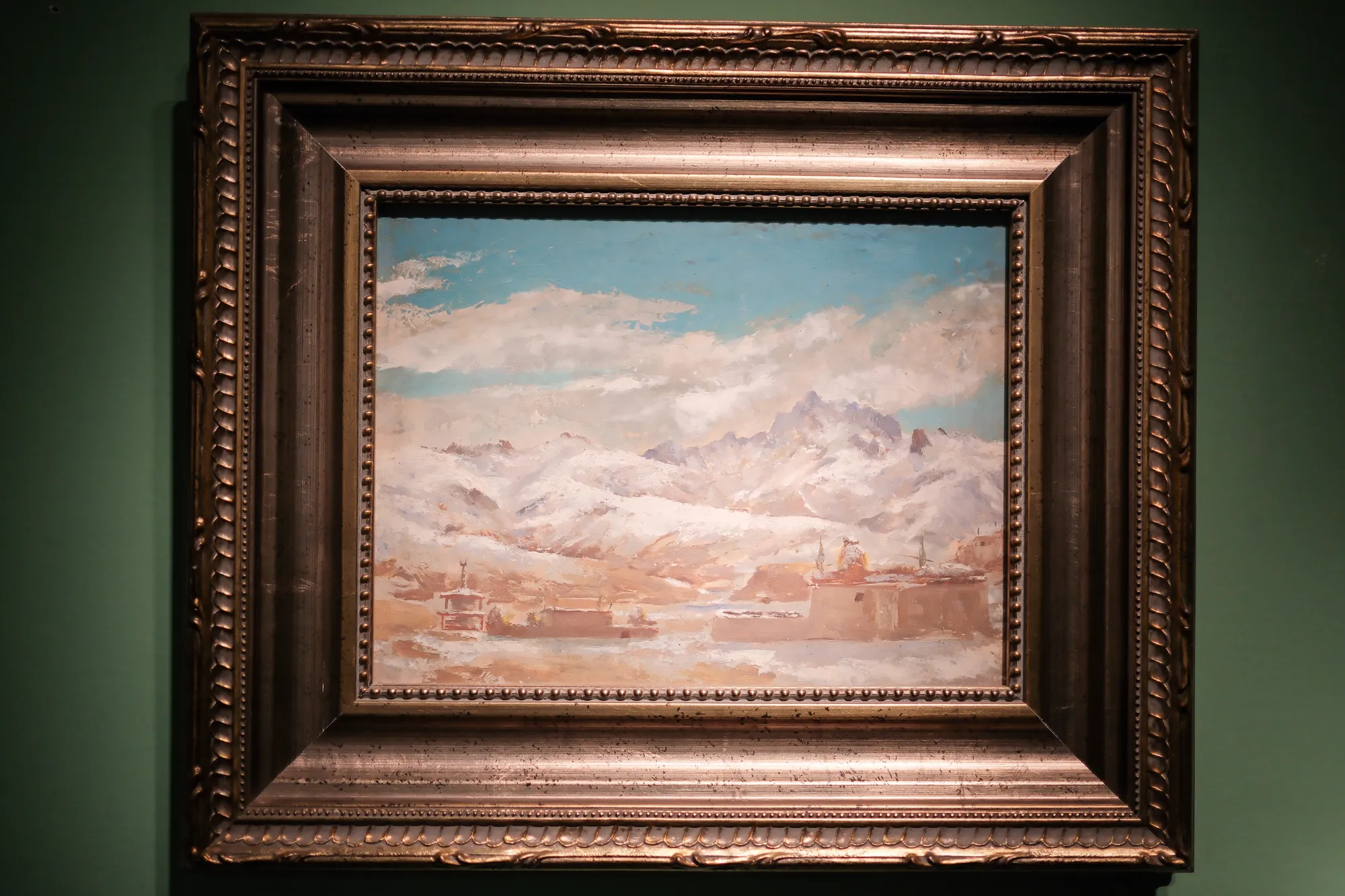
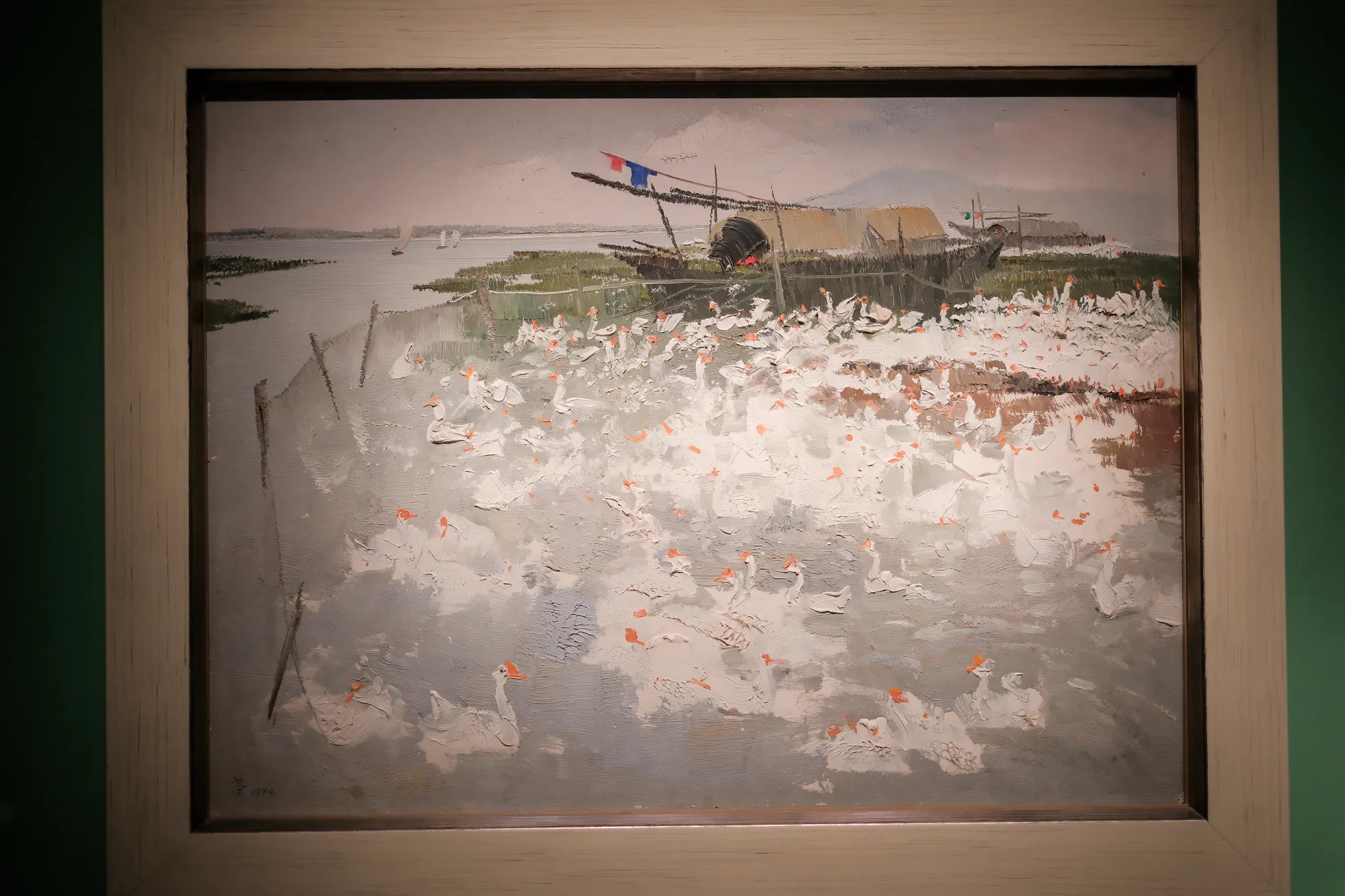
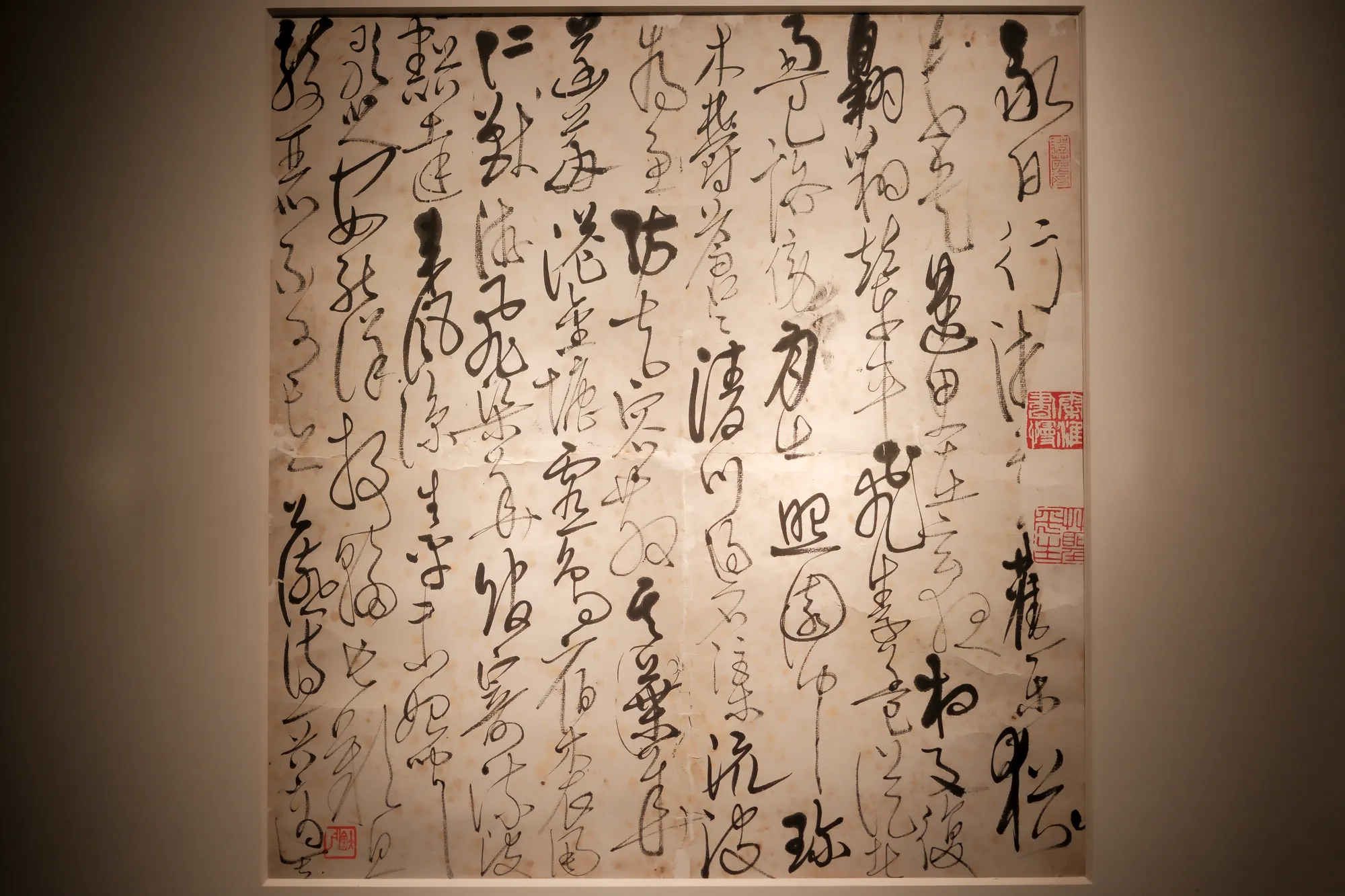
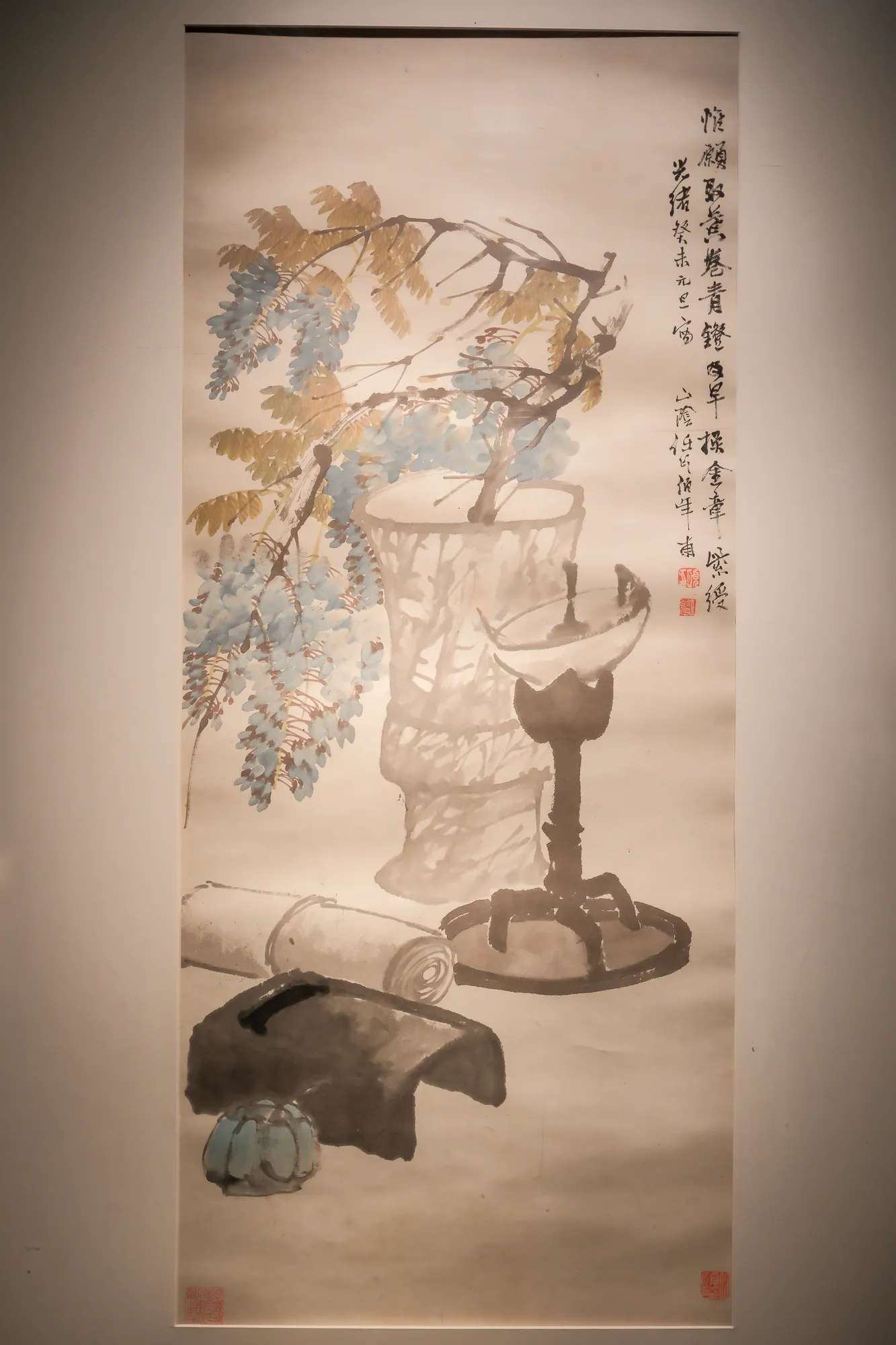
One is a long scroll in pale green — mountains and water, the brushwork so light it looks like something seen through rain. Another is vertical, dense with small characters, with a red seal at the bottom corner. One is a meticulous bird-and-flower piece, a branch pushing out past the frame with a bird below it.
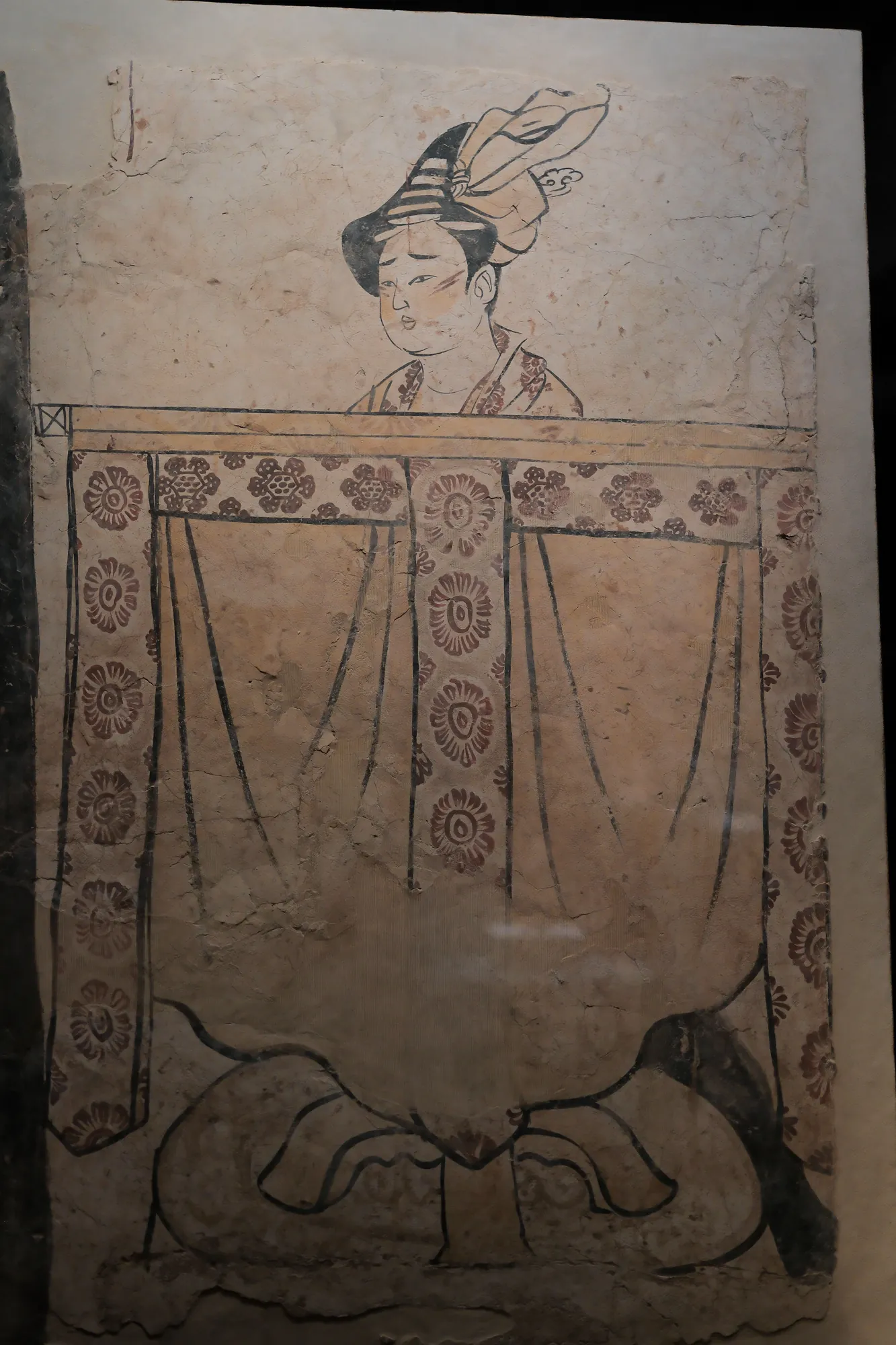
And one pure white-line drawing: a figure, the sleeve and the thing in the hand picked out with the finest possible line, the background entirely empty.
A Cup
After the exhibition, I drank something outside the building.
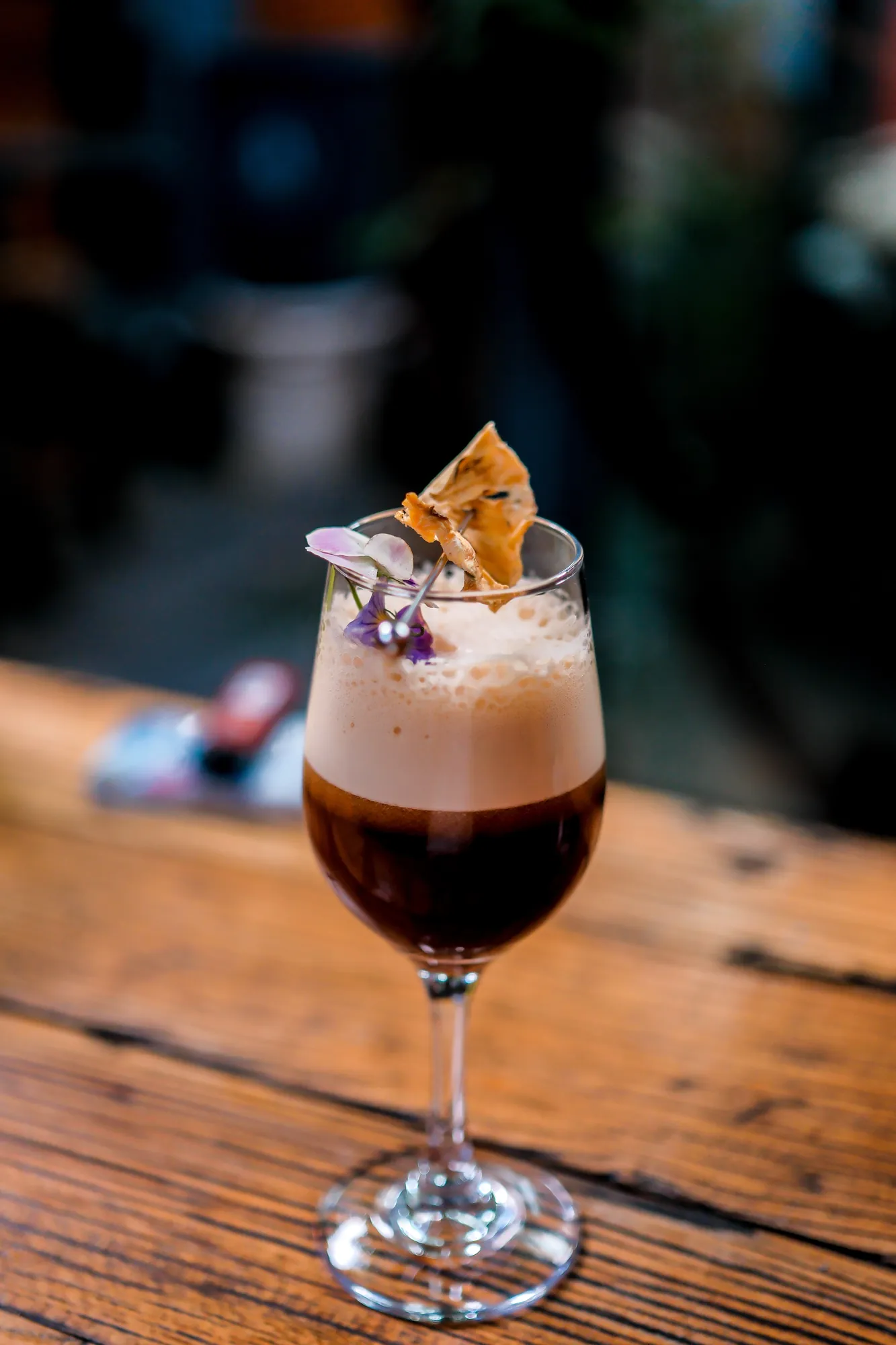
A dark liquid in a glass, a thin fog on the inside of the wall, a small sweet beside it. Syrup was running slowly down the outside of the glass.
Two Kinds of Time in One Day
The day was strange.
The morning things — the wall, the ridge beasts, the carved character, the magpie — were alive. They had wind, they had light, they had moving shadows. The afternoon things — the pot, the jade, the stone figures, the framed paintings — were stopped. They were lit, numbered, and kept behind glass.
A whole afternoon lay between them.
I kept thinking that the sleeve drawn in white line on that paper and the lamp half-swallowed by vines on the wall were really the same thing: an afternoon that has already passed but has not yet left.

