Light on Things: The Still-Life Section at the 2026 Beijing Camera Expo
The loudest part of the camera expo is lenses and bodies, spec sheets in long rows, sales staff everywhere. What actually stopped me was the far corner.
There were no cameras there. Only still lifes.
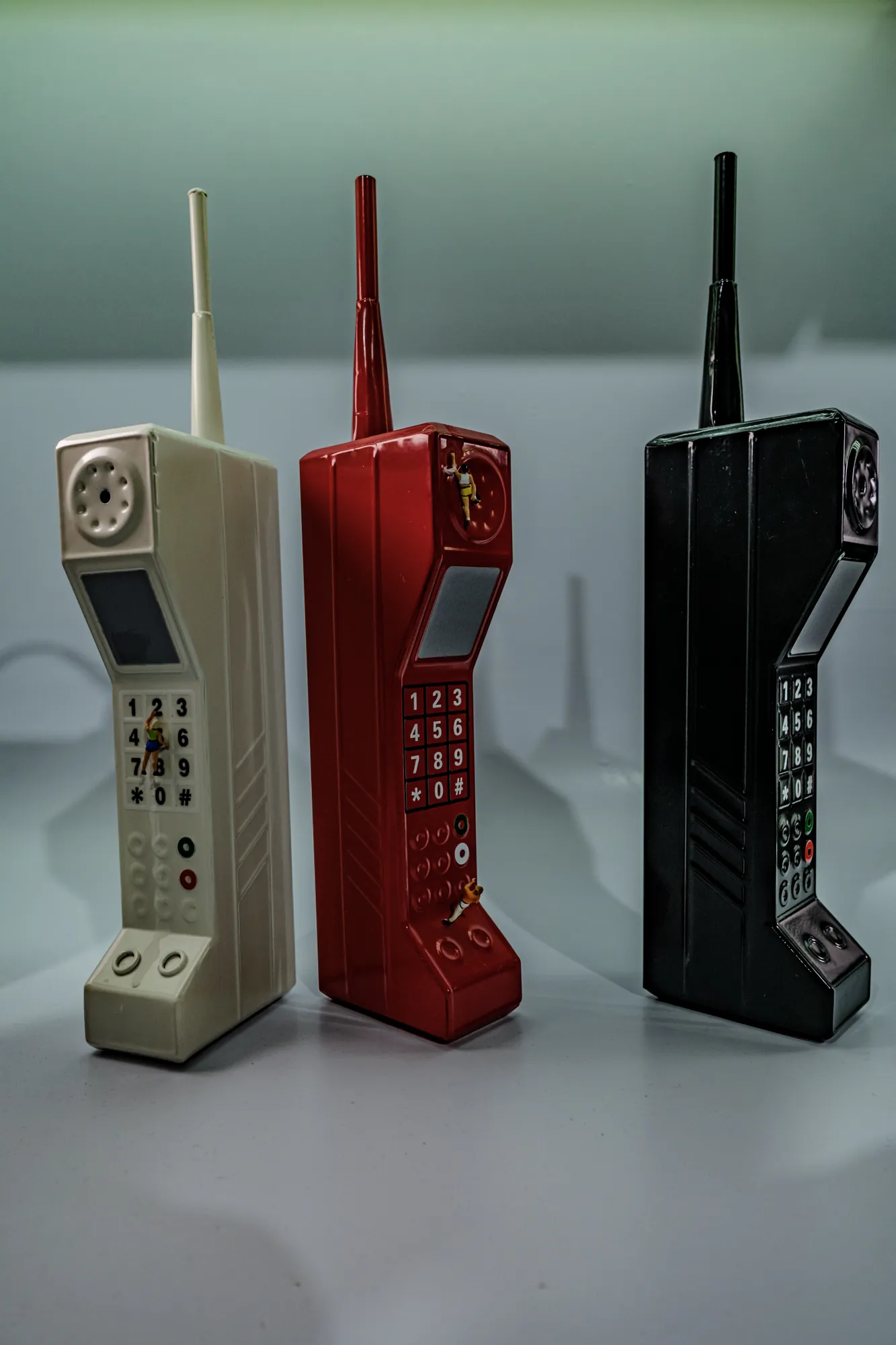
Three Brick Phones
The first group is three old brick phones — off-white, red, black — standing in a row against a white wall.
The aerials are absurdly thin, running up out of the top of each body. They are lit like three small towers: white light coming in from the front right, dropping three shadows of different lengths across the wall. You can count the keys.
Those were the first mobile phones. Looking at them now they are toys. People carried one each, and held it to their ear in the street.
Porcelain Figures and Bronze
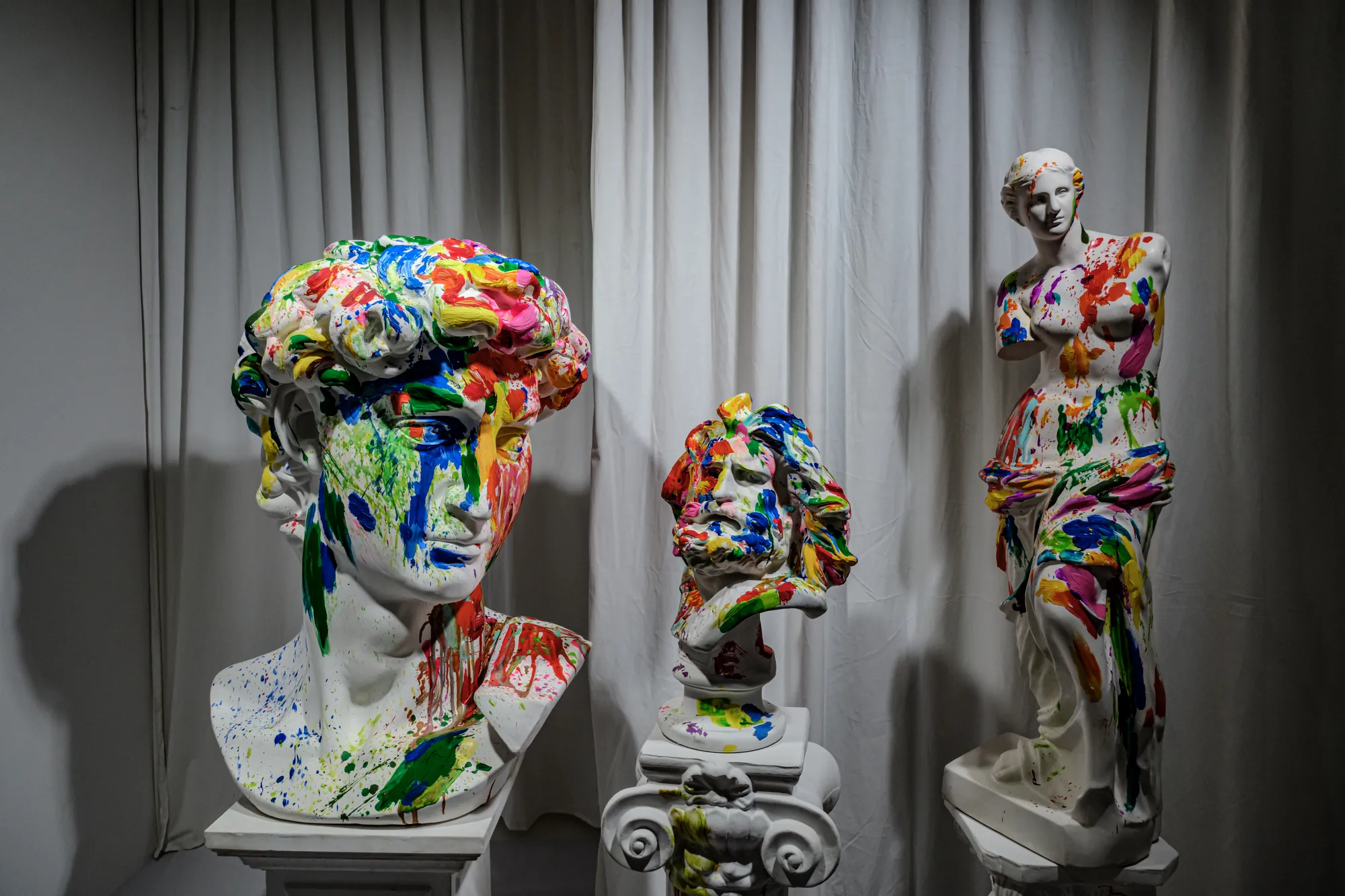
Next door stand three painted porcelain figures.
Not Buddhas — stage costumes: broad faces, painted brows, robes of red and green so saturated they look lit from within. The three stand in a row of uneven height on white plinths, with a grey cloth falling behind them and a single vertical fold that happens to serve as their shadow.
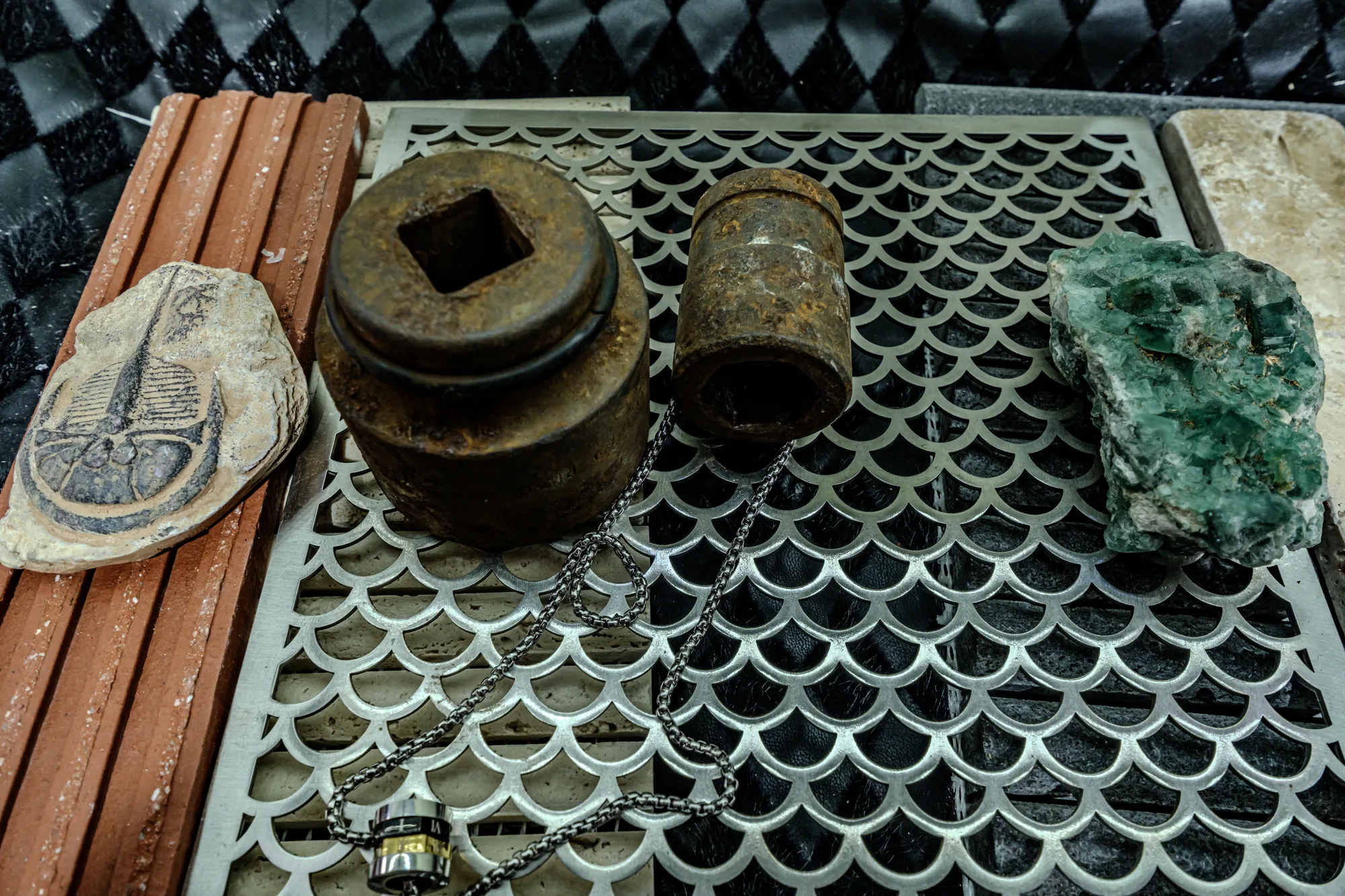
Further along, old bronze and jade lie scattered on a steel mesh table. The bronze has gone green with verdigris; the jade is a small blue-white piece; and there is a metal tag pressed between them, as if pried off something.
A Thread-Bound Book
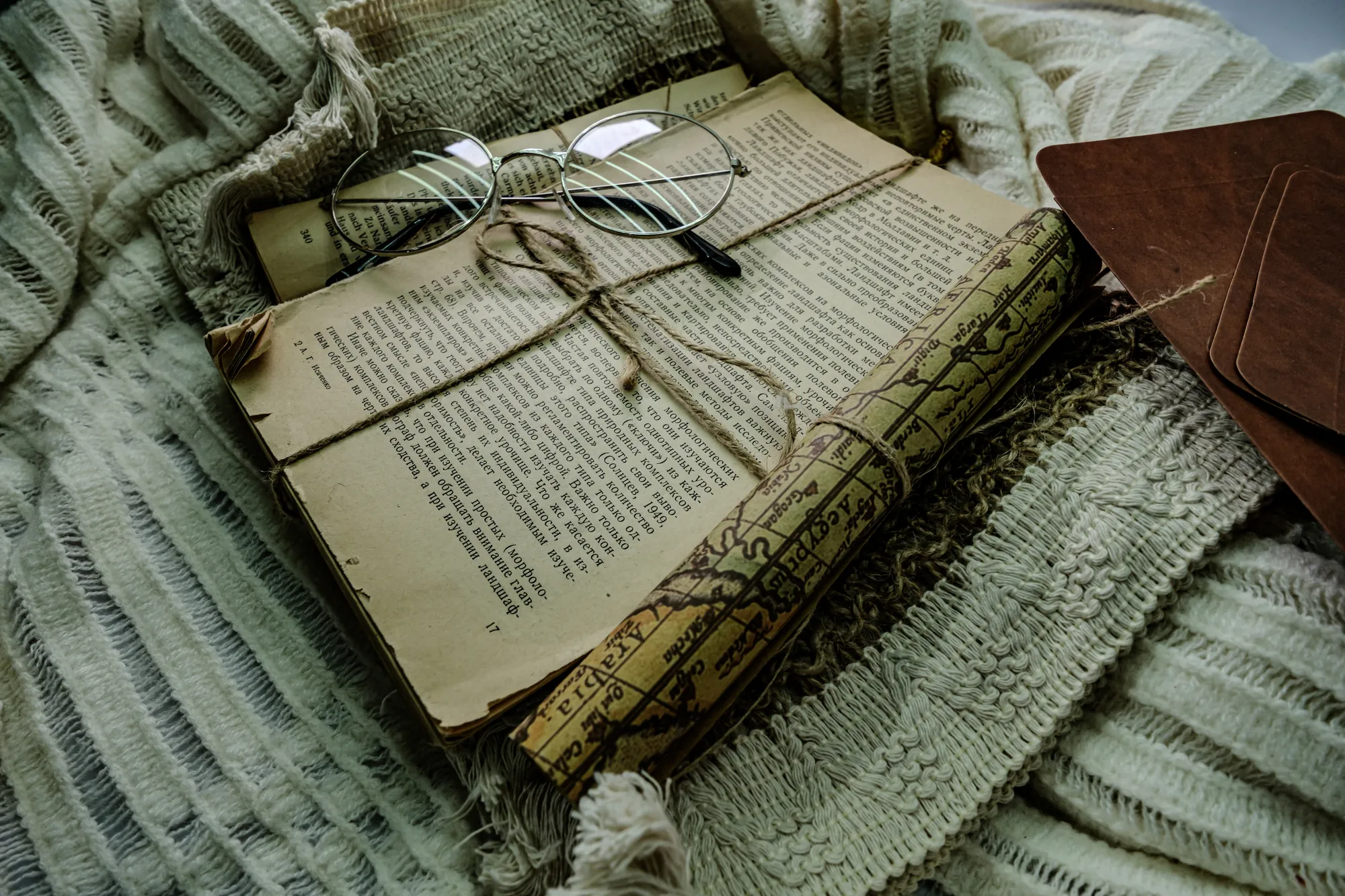
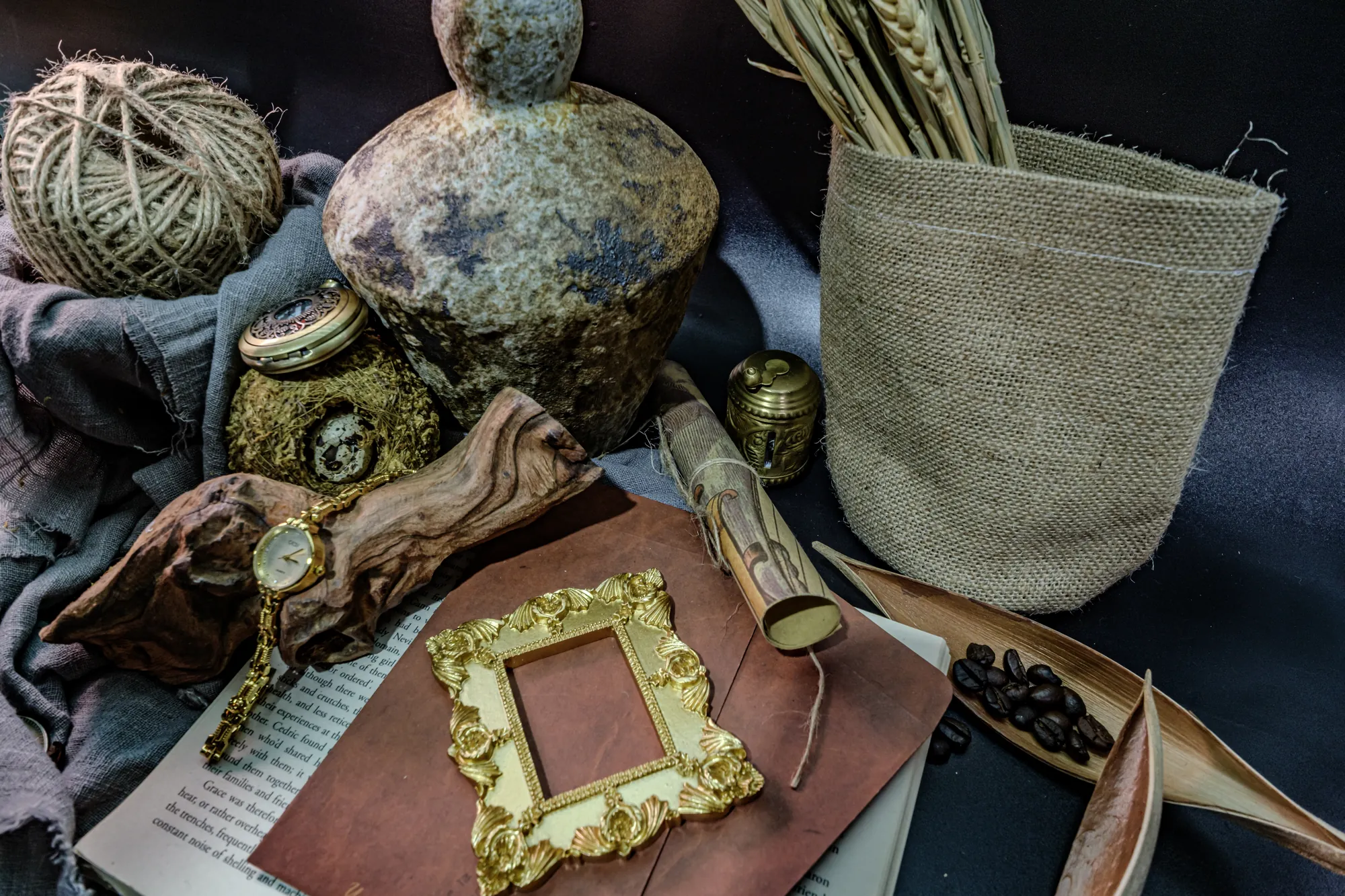
On coarse cloth lies a thread-bound book.
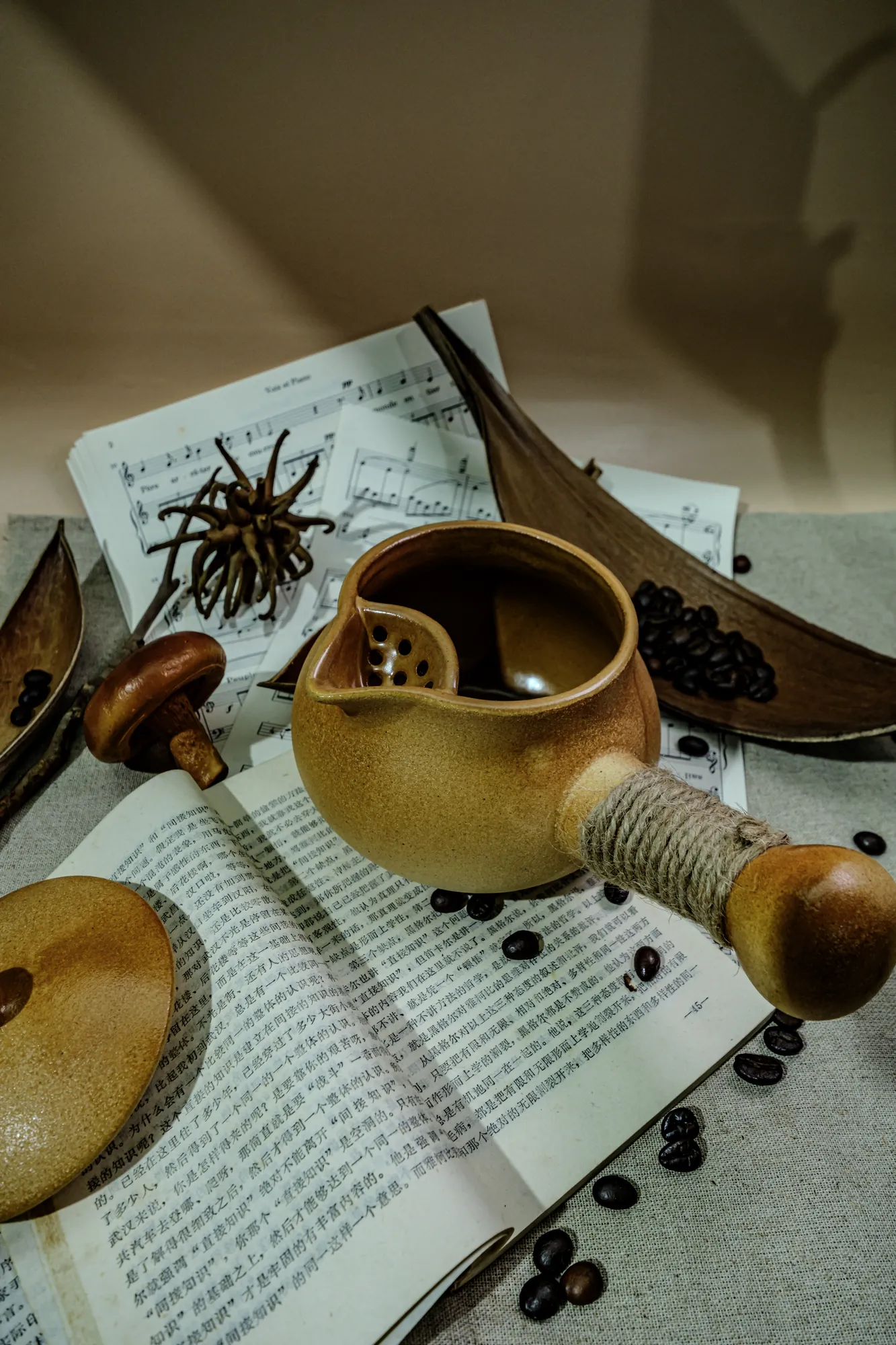
The pages have gone yellow, and the edge of the open sheet curls up so you can see the small vertical characters. Beside it rests a brown leather cover, its grain showing in the light, half sunk into the cloth.
This is the quietest picture of them all. There is not a sound in the whole frame.
Wool and a Loom
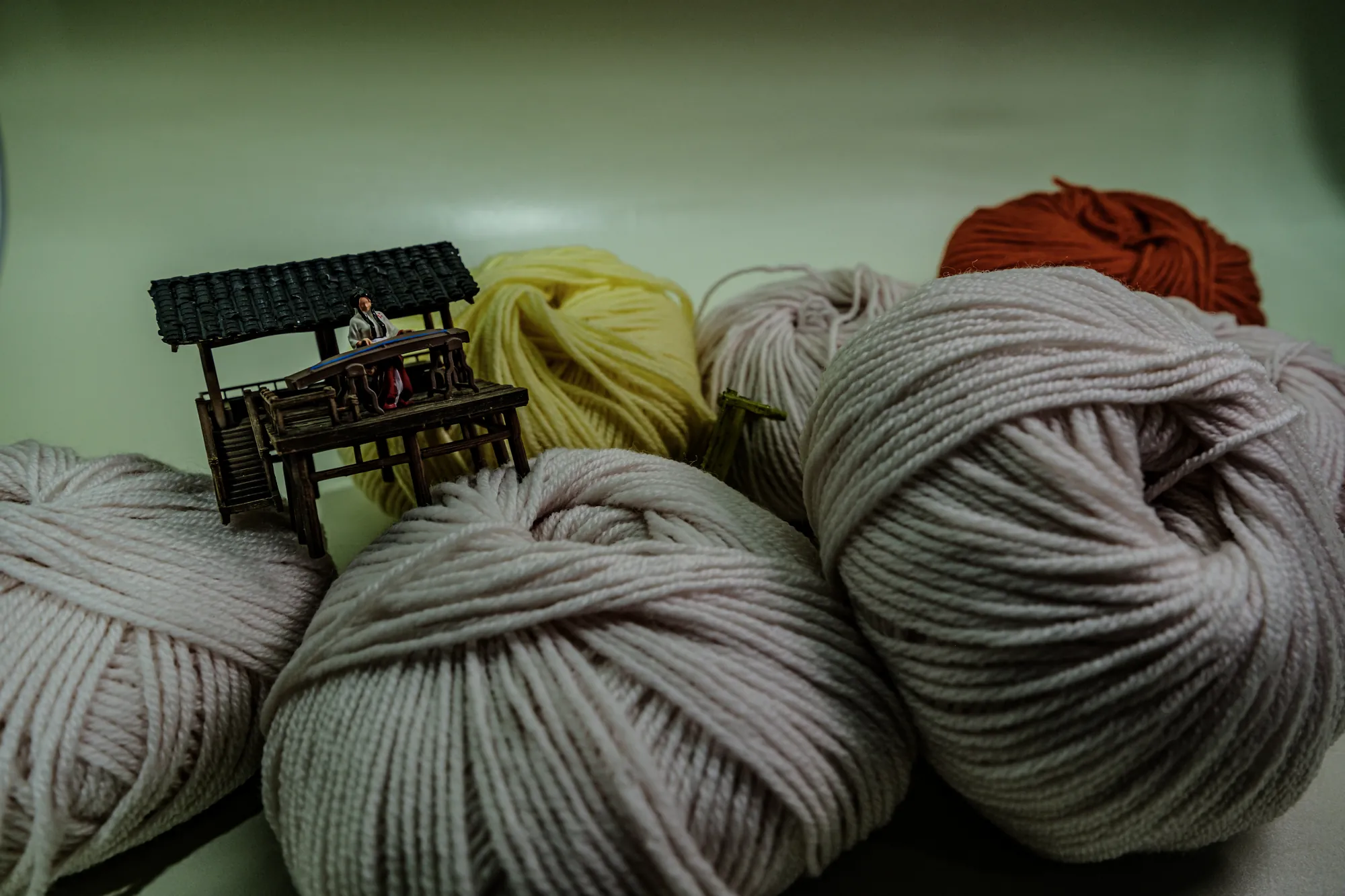
A few balls of grey-white wool sit beside a small wooden loom.
The yarn is coarsely spun, grey with a bit of cream, wound into loose balls where you can read the direction of the fibre. The loom is no bigger than a palm, its wood worn shiny by hands. Behind them is a pale green wall.
There is a sewing basket next to the loom, and a small tangle of odds and ends.
Food
One whole group is food.
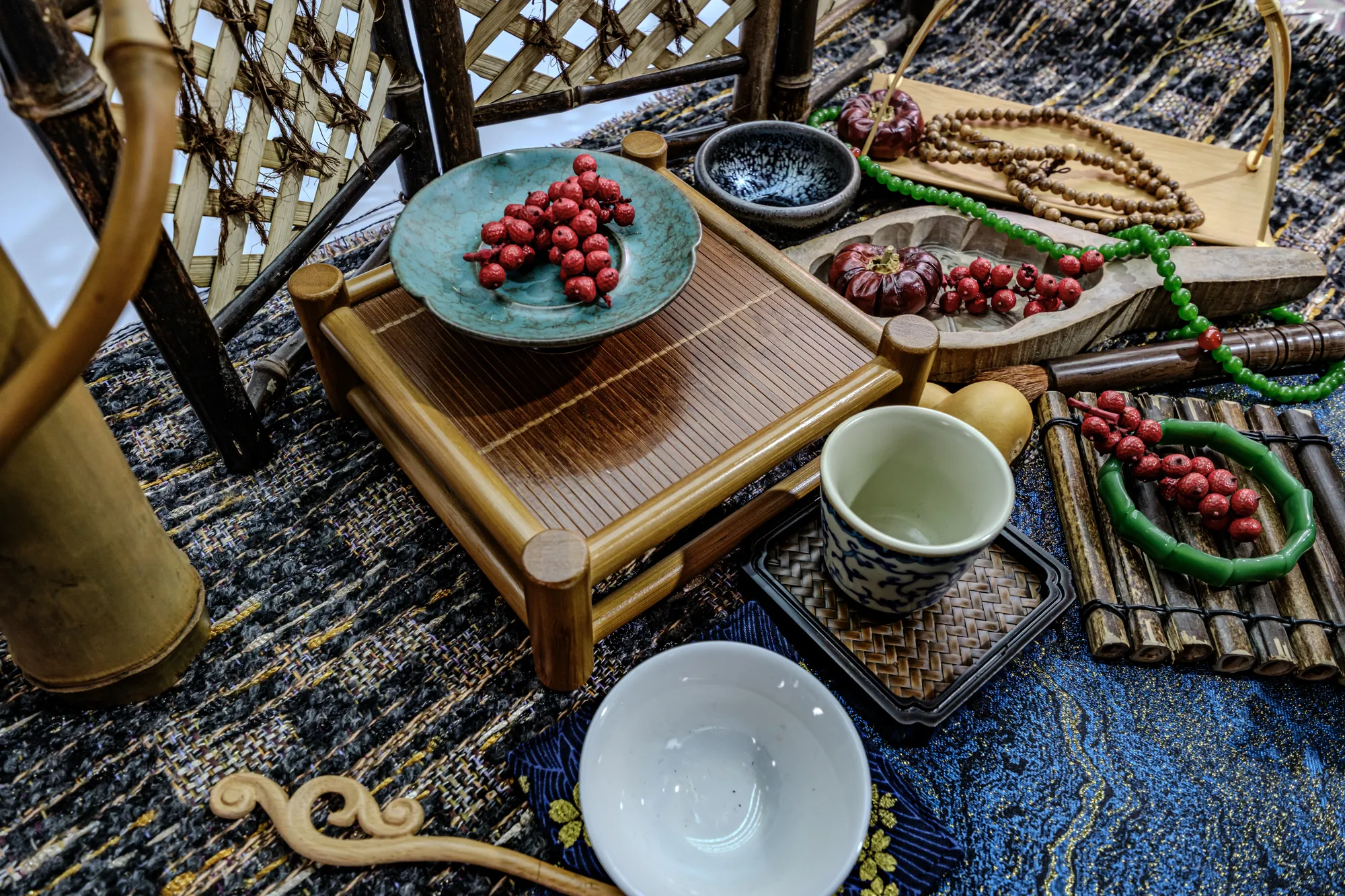
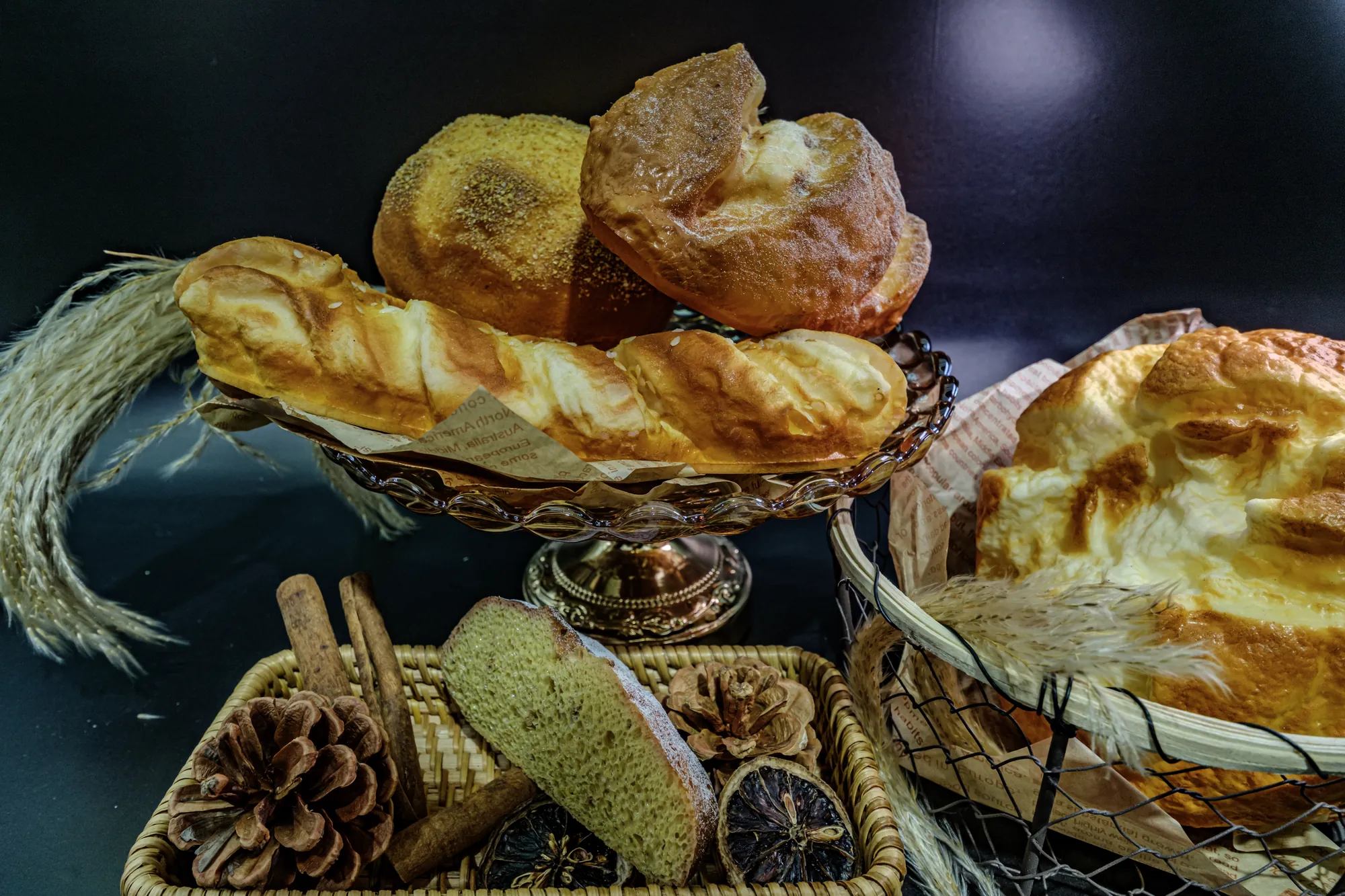
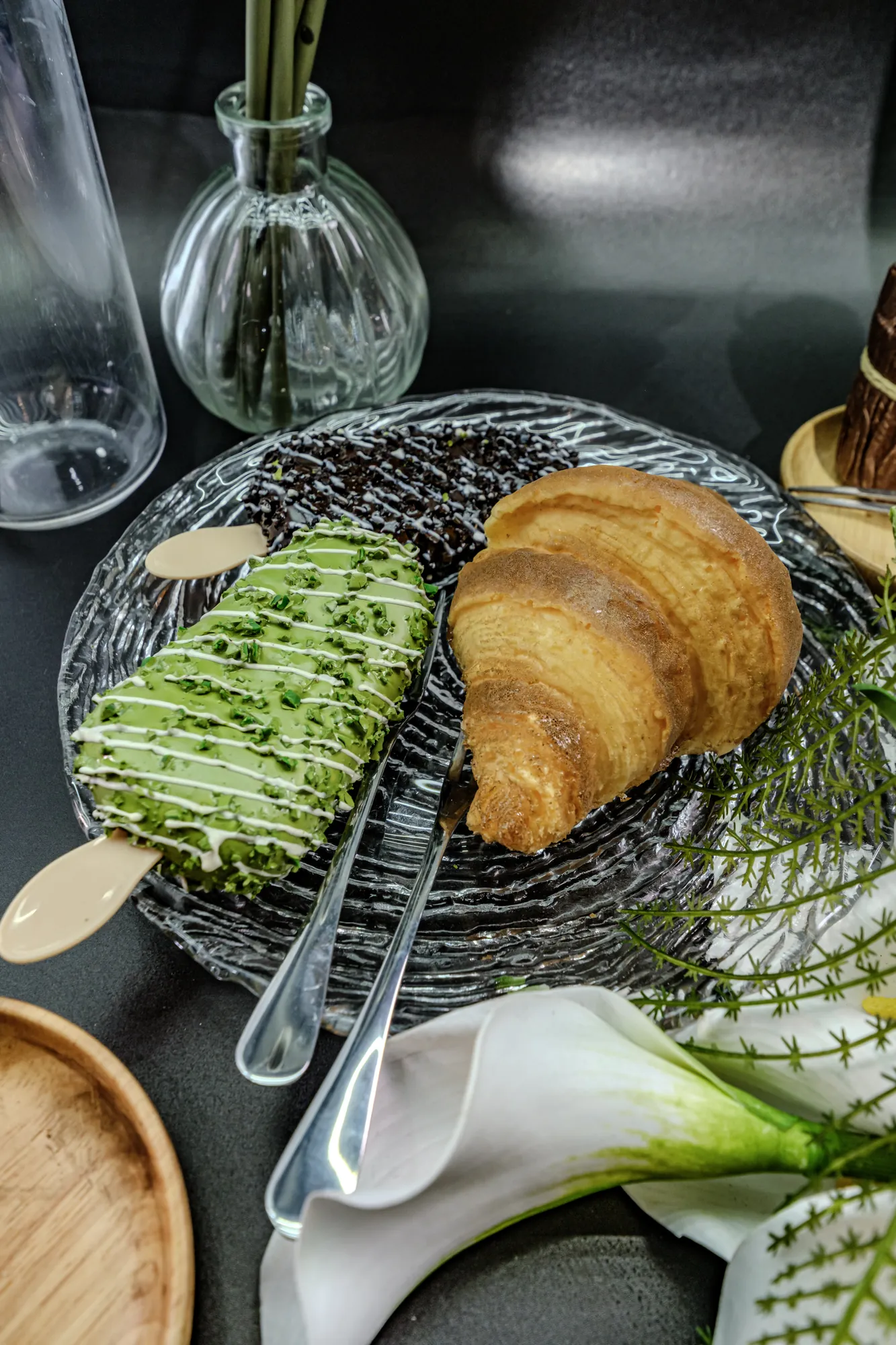
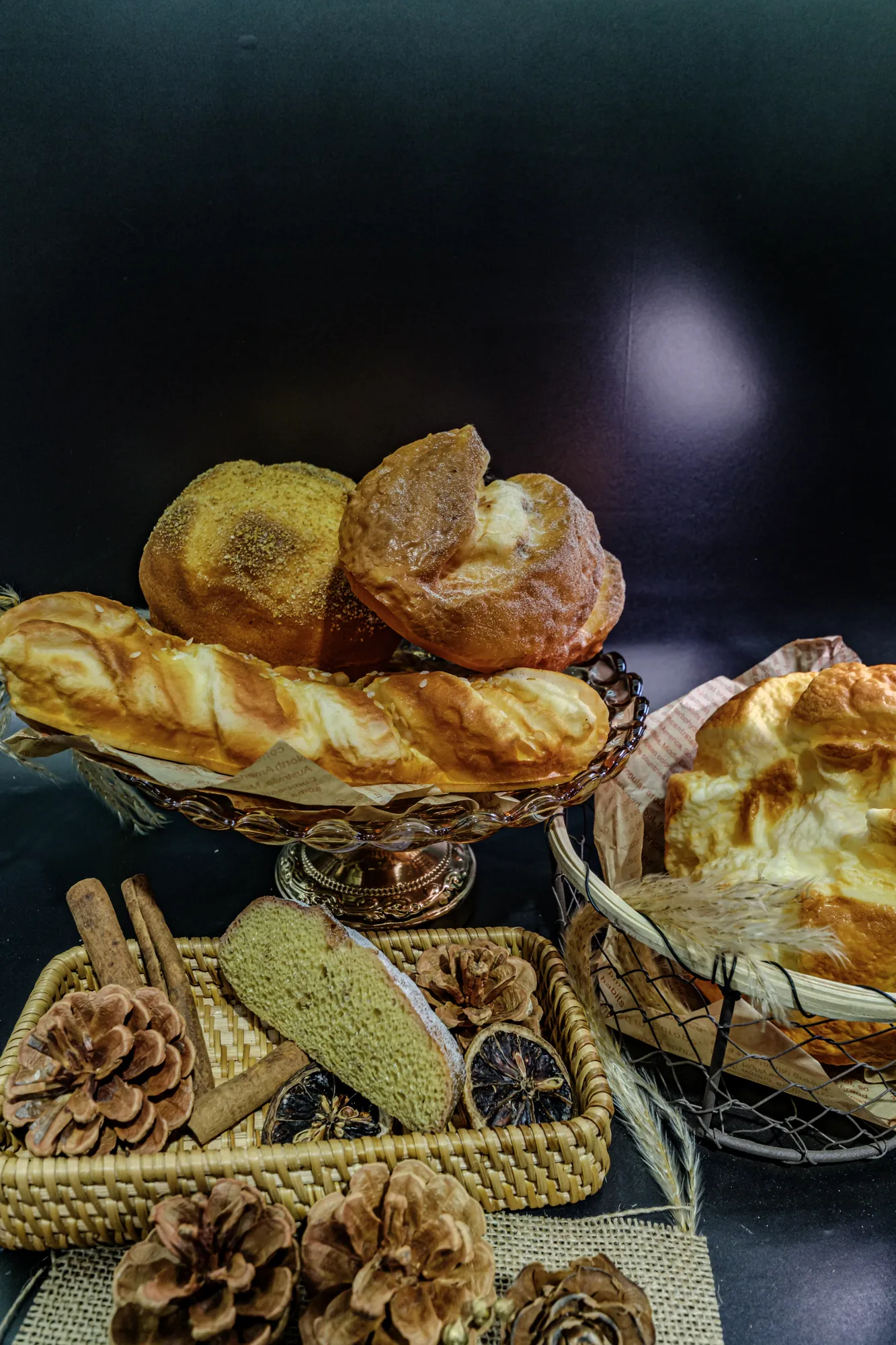
On a bamboo mat: red fruit, a white porcelain cup, and a brass key, the fruit rolled loose across the mat; a wicker basket heaped with bread and pine cones, light cutting in from the upper right so the cracks in the crust glow brown; a black plate with a croissant and salad, a silver fork lying across the foreground and a pane of glass catching a white block of reflection.
And one very simple picture: a single walnut on beige cloth against a whole field of blue.
Silver and Flowers
The richest group is silver.
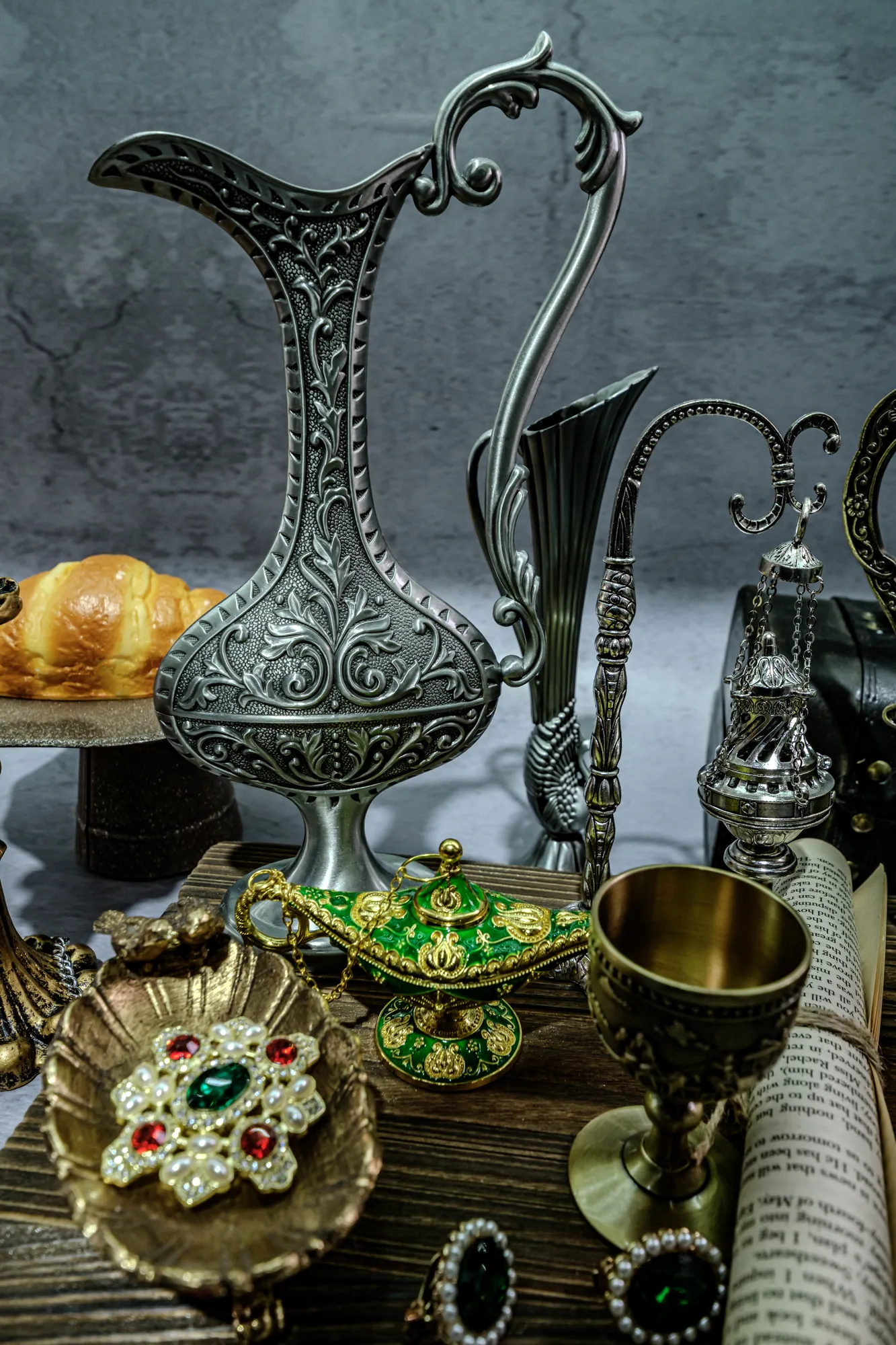
A chased silver jug with a long spout and a curling handle, its body carved over with dense pattern; beside it a small cup traced with gold around the rim. Behind the jug sits a gold tray, and further back turquoise and pearls.
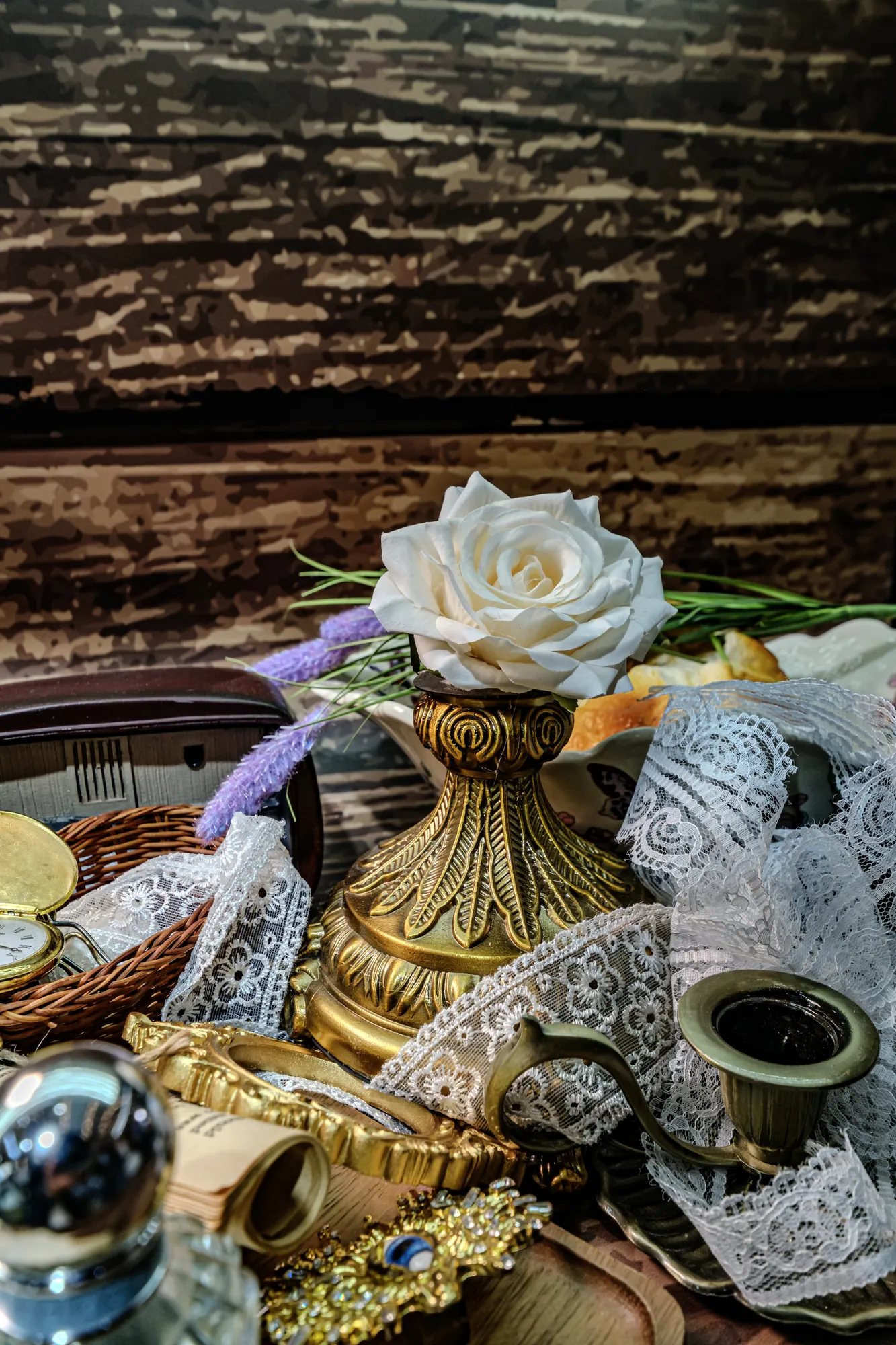
Next to that, white roses with lace and pearls on a dark wooden table; a pottery jar of white flowers, a burlap sack and a wooden ball resting on deep blue cloth.
An Old Trunk
The last frame is an old leather trunk.
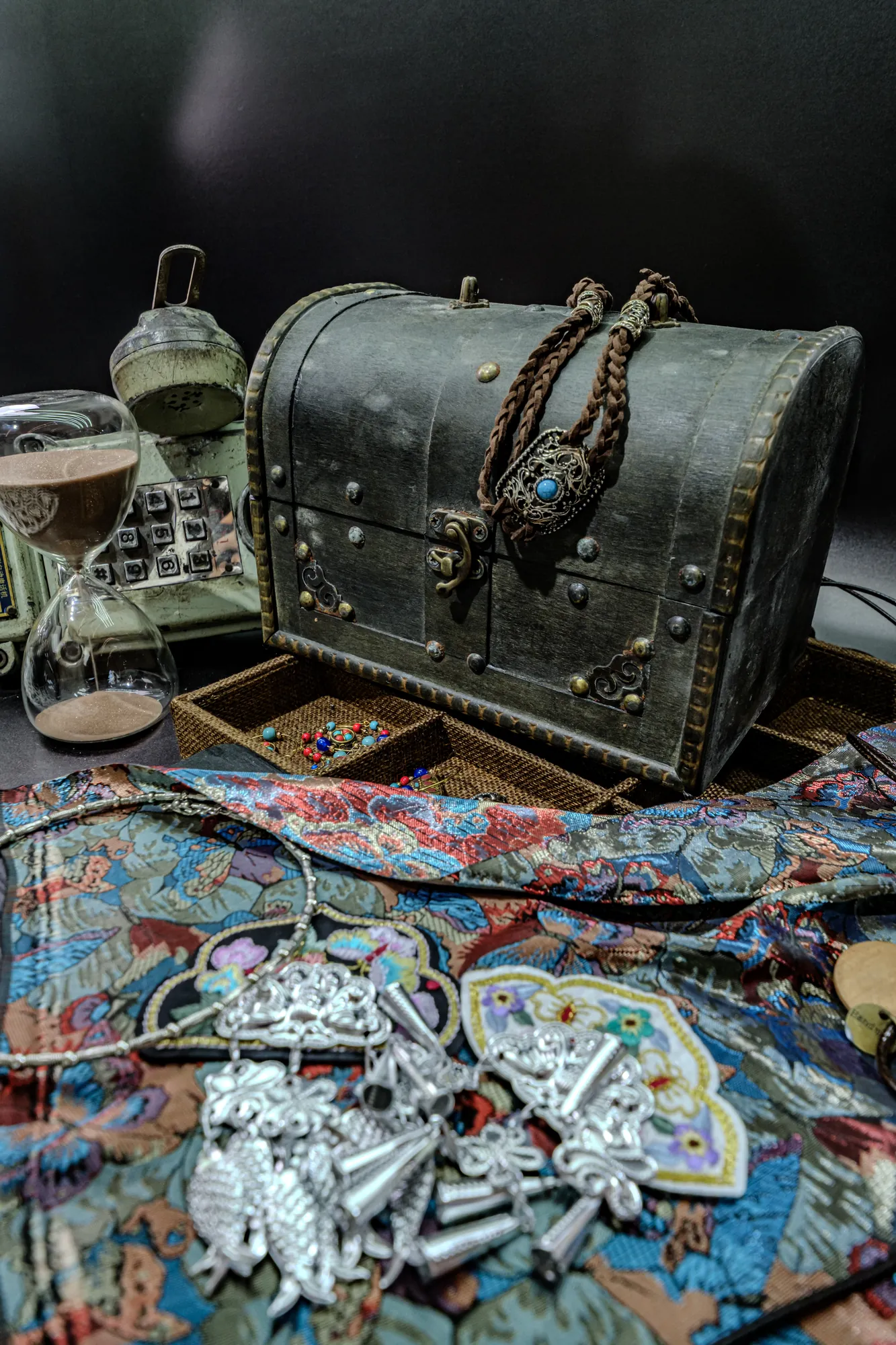
It lies open on patterned brocade, the leather rubbed pale, the brass buckle and the straps still on. Small silver ornaments spill out of it, and beside the trunk stands an old lamp with a patterned shade.
The light in that photograph comes from the upper left and turns the trunk into a lit block, with black all around it.
Why Still Life
Only after going round did I understand what the section was doing: it had put time inside objects.
The brick phone is the first mobile phone. The thread-bound book and the ball of wool are the daily texture of an earlier century. The chased silver jug and the leather trunk are older still. Each is set alone on its cloth and lit from one side — like a specimen, like an object in a museum case under the kind of light that makes the case glow.
And the food — the croissant, the pine cones, the walnut, the red fruit — is today. None of the pictures carries a caption, but set next to a brick phone, the food says the whole thing about time by itself.
Most people walked straight past that corner. I stood there for a long time.

